

Blog
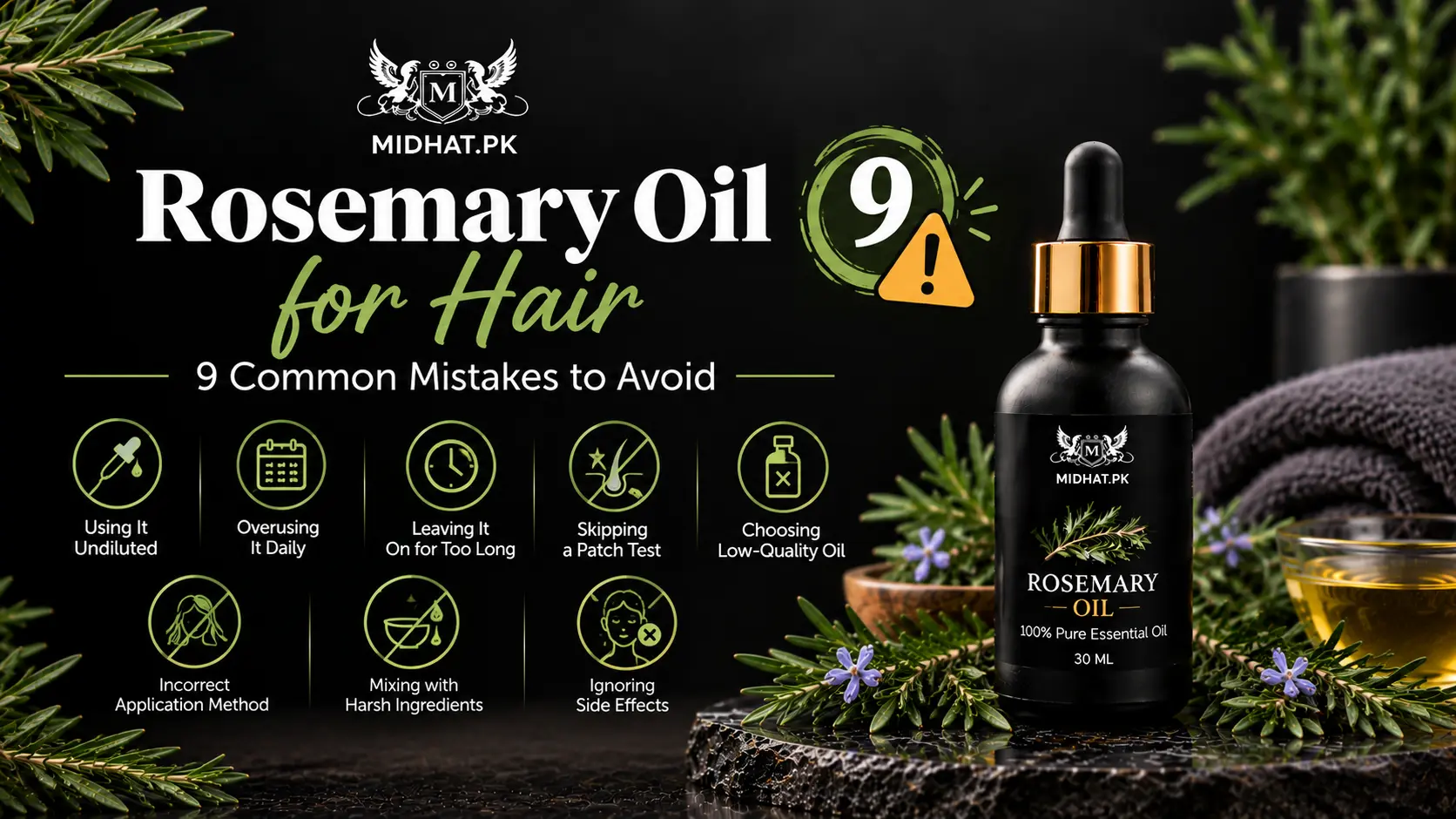
Rosemary Oil for Hair: 9 Common Mistakes to Avoid
Rosemary oil has become a popular ingredient in hair-care routines, especially among people looking for ways to support hair growth, manage hair fall, and maintain a healthy-looking scalp. However, getting started with rosemary oil is not simply about applying it and waiting for results. How you choose, prepare, and use the product also matters.
Some people apply concentrated essential oil directly to their scalp, use too much, or expect noticeable hair growth within a few days. These habits can lead to irritation, disappointment, or an unsuitable hair-care routine.
If you’re considering rosemary oil for hair, understanding the correct application method is an important first step. Rosemary oil has been studied for its potential role in hair growth, but the available research is limited and does not guarantee results for everyone.
In this guide, we’ll cover nine common rosemary-oil mistakes, explain how to avoid them, and show you how to incorporate the ingredient more carefully into your routine.
If you’re looking for a product to explore, visit Midhat Rosemary Oil and review the product information and usage instructions before applying it.
What Is Rosemary Oil?
Rosemary oil is an aromatic oil obtained from the rosemary plant. It is used in personal-care products, scalp treatments, and hair-care routines.
People commonly use rosemary oil because they are interested in its potential benefits for scalp care and hair growth. However, it is important to distinguish traditional use and early research from proven medical outcomes.
A clinical study has investigated rosemary oil in people with androgenetic alopecia, a form of pattern hair loss. The findings are interesting, but one study is not enough to establish that rosemary oil works for every type of hair loss.
You can read the published research in this clinical study on rosemary oil and hair growth.
For a broader introduction to the ingredient, read Midhat’s complete guide to rosemary oil benefits for hair.
Mistake 1: Applying Pure Rosemary Essential Oil Directly to the Scalp
One of the most important mistakes to avoid is applying concentrated rosemary essential oil directly to your scalp without checking whether dilution is required.
Essential oils are concentrated substances. Applying them undiluted can cause irritation or an allergic skin reaction, particularly in people with sensitive skin.
A safer approach is to check the product label and follow the recommended application method. If you’re using pure rosemary essential oil, appropriate dilution is generally necessary unless the product is specifically formulated and labeled for direct application.
Do not assume every product marketed as rosemary oil has the same concentration or formulation.
Before starting, check the instructions on Midhat’s Rosemary Oil product page so you understand which application guidance applies to your product.
Mistake 2: Using Too Much Rosemary Oil
Using more rosemary oil does not automatically mean better results.
Excessive application can make your scalp greasy, increase product buildup, or expose your skin to more of a concentrated ingredient than necessary.
Instead of pouring oil directly onto your scalp, use a measured amount appropriate for the product and your hair length. If dilution is required, prepare the mixture according to reliable instructions.
The goal is to distribute a suitable amount without soaking your scalp or hair.
If your scalp becomes uncomfortable, itchy, red, or unusually greasy, stop using the mixture and reassess your routine.
Mistake 3: Skipping the Patch Test
Even if a product contains a natural ingredient, it can still cause an unwanted skin reaction.
A patch test is a sensible precaution before introducing a new oil or mixture to your routine.
Follow these steps:
- Prepare the product according to its instructions.
- Apply a small amount to a limited area of skin.
- Observe the area for signs of irritation.
- Avoid regular use if redness, itching, swelling, or burning develops.
A patch test cannot guarantee that a reaction will never occur, but it can help identify some problems before wider application.
If you have a history of skin reactions or a persistent scalp condition, seek advice from a healthcare professional before using essential oils.
Mistake 4: Expecting Overnight Hair Growth
Rosemary oil is often discussed as a natural option for people concerned about thinning hair. However, hair growth takes time, and results are not guaranteed.
Your experience may depend on the cause of hair loss, your general health, scalp condition, and the consistency of your routine.
It is unrealistic to expect dramatic growth within a few days. Changes in hair density usually require longer observation, and rosemary oil may not help with every cause of hair loss.
If you want to understand the potential timeline in more detail, read our guide to rosemary oil and other hair-care topics on the Midhat’s blog.
Remember that persistent or sudden hair loss may need medical assessment rather than another oil or cosmetic product.
Mistake 5: Using Rosemary Oil Without Considering Your Scalp Type
Not every scalp responds to oils in the same way.
For example, a person with a dry scalp may have different needs from someone who experiences excessive oiliness, irritation, or dandruff.
Before adding rosemary oil, consider your existing symptoms:
- Dry scalp: Avoid products that increase dryness or irritation.
- Oily scalp: Heavy oil application may make your hair feel greasy.
- Sensitive scalp: Fragrances and essential oils may trigger irritation.
- Flaky scalp: Determine whether you have dandruff, dryness, or another skin condition.
- Hair breakage: Review your conditioning, heat-styling, and detangling habits as well as your oil routine.
Rosemary oil is not a universal solution for all scalp concerns.
If dandruff is your main issue, a suitable anti-dandruff shampoo may be more effective than applying additional oil. The American Academy of Dermatology’s dandruff treatment guide explains established treatment options.
Mistake 6: Leaving Rosemary Oil on Longer Than Recommended
Some people believe that leaving rosemary oil on their scalp overnight will automatically improve the results.
There is no strong evidence that longer exposure guarantees better hair growth. Extended contact may also increase irritation for people who do not tolerate the product well.
Follow the product instructions rather than assuming that overnight application is necessary.
If the product is intended for use as a pre-wash treatment, use it accordingly. Wash it out if irritation or discomfort develops, and do not continue applying it when your scalp is reacting badly.
Consistency and appropriate use are more sensible goals than leaving oil on for as long as possible.
Mistake 7: Changing Your Routine Too Frequently
Hair-care routines work best when you can assess how your scalp and hair respond to individual products.
If you introduce rosemary oil, several new shampoos, multiple essential oils, and different scalp treatments at the same time, it becomes difficult to identify which product is helping or causing a problem.
A more practical approach is to:
- Start with a simple routine.
- Introduce one new product at a time.
- Follow the recommended application instructions.
- Monitor your scalp for irritation or changes.
- Review your routine if symptoms persist.
You can also compare different hair-care options through Midhat’s guide to choosing the best hair oil in Pakistan.
Remember that an oil is only one part of hair care. Gentle cleansing, appropriate conditioning, and avoiding excessive heat or tight hairstyles can also matter.
Mistake 8: Ignoring Side Effects
Rosemary oil may not suit everyone. Essential oils can cause irritation or allergic contact reactions, especially when used inappropriately.
Stop using the product if you experience:
- Burning or persistent itching
- Redness or swelling
- A rash
- Increased scalp discomfort
- Worsening irritation or flaking
Do not apply more oil to try to overcome these symptoms. If the reaction is severe or does not improve after stopping the product, seek medical advice.
If your hair is falling out excessively, avoid assuming that rosemary oil will resolve the problem. Hair loss can be associated with genetics, illness, nutritional issues, hormonal changes, medications, and other factors.
A healthcare professional can help identify the cause and discuss suitable treatment options.
Mistake 9: Buying Rosemary Oil Without Checking the Product Information
The quality and formulation of a product matter when choosing an oil for personal care.
Before purchasing rosemary oil, check the product description, ingredients, intended use, and application instructions.
Be cautious of products that promise guaranteed regrowth, instant results, or a cure for every type of hair loss. Such claims should not replace evidence-based advice.
If you’re considering rosemary oil for your routine, you can explore Rosemary Oil by Midhat and review the information available on the product page.
You can also browse Midhat’s essential oil collection to compare available products. Make sure you understand how each oil is intended to be used before applying it to your scalp.
How to Use Rosemary Oil for Hair More Carefully
Once you understand the common mistakes, building a straightforward routine becomes easier.
Step 1: Check the Product Type
Determine whether you have pure rosemary essential oil or a ready-to-use hair oil. The instructions may differ.
Step 2: Follow the Dilution Instructions
If the product is a concentrated essential oil, dilute it appropriately before scalp application unless it is specifically formulated for direct use.
Step 3: Patch Test
Test a small amount of the prepared product on a limited area of skin and monitor for irritation.
Step 4: Apply a Suitable Amount
Use the quantity recommended for the product. Avoid excessive application, especially if your scalp tends to be oily.
Step 5: Follow the Recommended Contact Time
Do not assume that overnight use is necessary. Follow the label and wash the product out if irritation develops.
Step 6: Monitor Your Scalp
Pay attention to changes in comfort, dryness, itching, or flaking. Discontinue use if symptoms worsen.
Step 7: Be Realistic About Results
Use the product only as directed and understand that results vary. Rosemary oil cannot guarantee hair growth or treat every cause of hair loss.
For more information about using rosemary oil in a hair-care routine, revisit Midhat’s rosemary oil hair-care guide.
Rosemary Oil and Carrier Oils: What Should You Know?
A carrier oil can help dilute concentrated rosemary essential oil. However, not every carrier oil feels the same on the scalp.
Jojoba oil, for example, is commonly used in hair and skin-care products. If you’re comparing ingredients for your routine, explore Midhat’s essential oil collection and check the instructions for each product.
Keep in mind that combining oils does not guarantee better results. More ingredients can also make it harder to identify the cause if your scalp becomes irritated.
Start simply, follow product guidance, and avoid experimenting with several concentrated oils at once.
How Long Should You Try Rosemary Oil?
There is no guaranteed timeframe for rosemary oil to produce hair-growth results.
The cause of your hair concern is important. Hair breakage, temporary shedding, pattern hair loss, and scalp conditions are different issues and may require different approaches.
If you are monitoring your routine, take occasional photos under similar lighting and avoid judging progress based on daily changes.
If you experience sudden, patchy, or persistent hair loss, consult a dermatologist. Do not delay an assessment while repeatedly trying new oils.
Frequently Asked Questions
1. What is the biggest mistake when using rosemary oil for hair?
Applying concentrated rosemary essential oil without checking dilution requirements is an important mistake to avoid. Incorrect use can irritate the scalp.
2. Can I use rosemary oil on my scalp every day?
Daily use is not necessary for everyone and may increase irritation or buildup. Follow the specific product instructions and adjust your routine if your scalp reacts badly.
3. Should I leave rosemary oil on my hair overnight?
Not necessarily. Longer contact does not guarantee better results. Follow the product’s instructions and remove it if irritation occurs.
4. How long does rosemary oil take to show hair-growth results?
There is no guaranteed timeline. Results depend on the cause of hair loss and individual factors, and the evidence for rosemary oil remains limited.
5. Can rosemary oil cause hair fall?
Rosemary oil is not known to cause hair loss in everyone, but irritation or an allergic reaction may affect scalp comfort. Stop using it if you notice a concerning reaction or worsening symptoms.
6. Can I mix rosemary oil with another hair oil?
A suitable carrier oil can be used to dilute concentrated rosemary essential oil. Follow appropriate dilution guidance, and avoid mixing multiple products without understanding their ingredients.
7. Is rosemary oil suitable for every hair type?
Not necessarily. Individual scalp sensitivity and hair-care needs vary. Patch test new products, follow the instructions, and discontinue use if irritation develops.
8. Where can I buy rosemary oil in Pakistan?
You can review the available details for Midhat’s Rosemary Oil on the official product page before deciding whether it suits your needs.
Final Thoughts
Rosemary oil can be an option to explore as part of a hair-care routine, but correct use and realistic expectations matter.
Avoid applying concentrated essential oil without appropriate dilution, using excessive amounts, ignoring irritation, or expecting overnight growth. Choose products carefully and pay attention to how your scalp responds.
Most importantly, remember that rosemary oil is not a guaranteed treatment for hair loss. If your hair fall is persistent, sudden, or severe, seek professional advice to identify the underlying cause.
To learn more about the product and its intended use, visit the Midhat’s Rosemary Oil product page.