

Blog
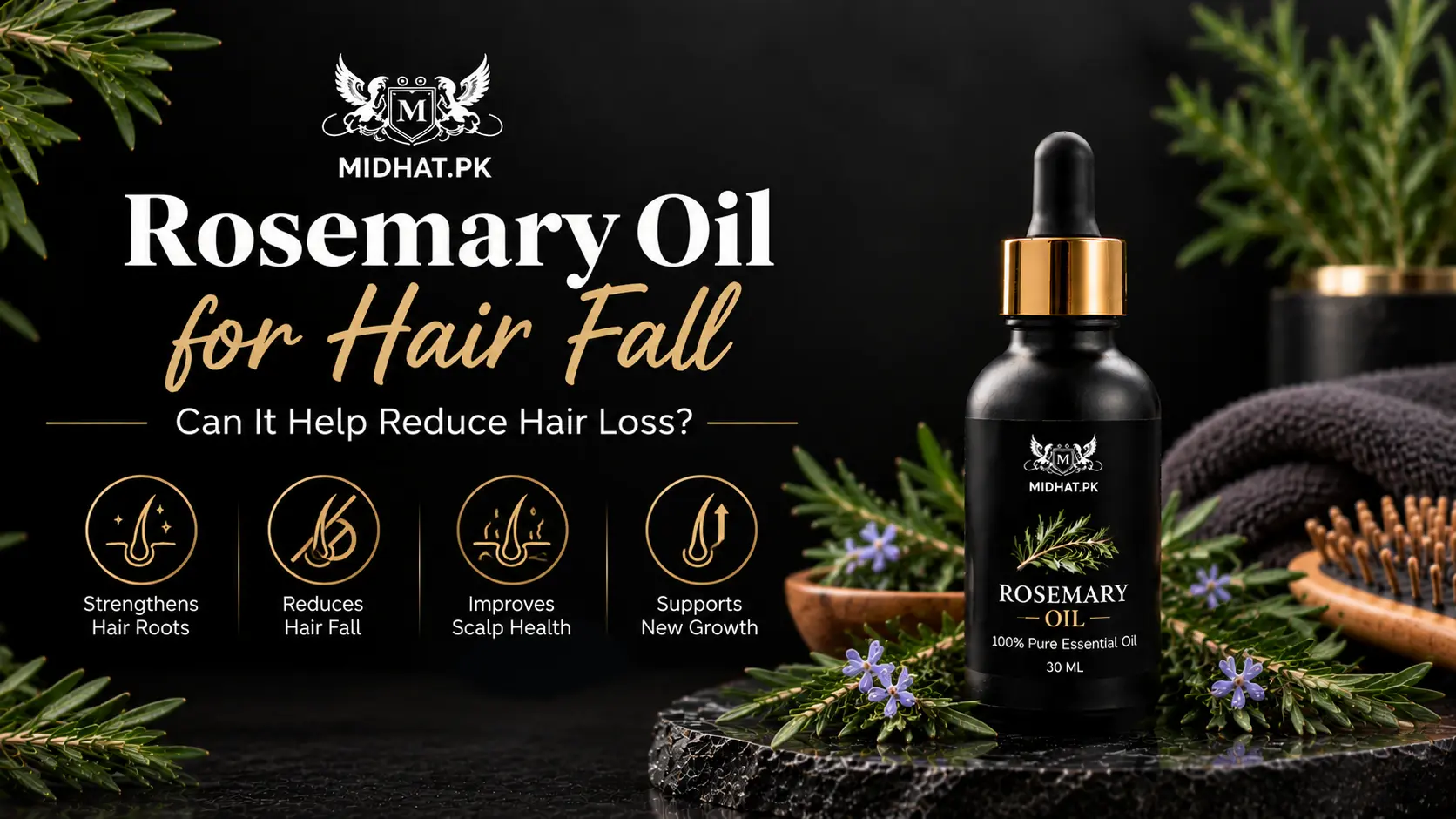
Rosemary Oil for Hair Fall: Can It Help Reduce Hair Loss?
Hair fall is one of the most common hair concerns, especially when the scalp is exposed to stress, pollution, heat, styling, dryness, or poor hair-care habits. When you notice more hair than usual on your pillow, comb, or shower floor, it is natural to look for a simple solution.
One ingredient that has gained attention in natural hair care is rosemary oil. But can rosemary oil for hair fall actually help?
Rosemary oil is commonly used as part of scalp-care routines because it can help support a healthy scalp and may be useful for people dealing with thinning or weak-looking hair. It should not be treated as a guaranteed cure for every type of hair loss, but consistent and correct use can make it a useful part of a broader hair-care routine.
If you want to understand the overall benefits and uses first, read this detailed guide to rosemary oil for hair.
What Causes Hair Fall
Hair fall can happen for many different reasons. Some shedding is completely normal, but excessive or sudden hair loss can have an underlying cause.
Common factors include:
- Stress and lack of sleep
- Poor nutrition
- Hormonal changes
- Excessive heat styling
- Tight hairstyles
- Frequent chemical treatments
- Dry or irritated scalp
- Dandruff and scalp buildup
- Hair breakage
- Certain medical conditions
This is why choosing a hair oil should depend on the reason behind your hair concerns.
For general hair nourishment, you can also explore Midhat’s guide to the best hair oils in Pakistan and compare different oils according to your hair type and needs.
Can Rosemary Oil Help With Hair Fall?
Rosemary oil may be helpful as part of a consistent scalp and hair-care routine.
Research has investigated rosemary oil for hair growth, including a clinical trial comparing rosemary oil with minoxidil for androgenetic alopecia. The results suggest that rosemary oil may have potential, although more research is still needed before making strong claims about its effectiveness.
This distinction is important. Rosemary oil for hair fall should be viewed as a supportive hair-care option rather than a guaranteed treatment for medical hair loss.
Midhat’s Rosemary Oil can be incorporated into a regular scalp-care routine when properly diluted and used according to safe application practices.
How Can Rosemary Oil Support Hair Health?
1. Supports a Healthy Scalp
Healthy-looking hair starts with a healthy scalp. Regular scalp care can help keep the skin comfortable and reduce dryness caused by poor hair-care habits.
Rosemary oil is often used in scalp massage routines because of its aromatic and botanical properties.
2. May Support Hair Growth
One reason rosemary oil has become popular is its potential connection with hair growth.
While results vary from person to person, using rosemary oil consistently may support an environment where the scalp and hair can remain healthier.
If your primary goal is growth, you can also read our detailed guide on rosemary oil benefits for hair growth before starting a routine.
3. Helps With Dryness and Hair Care
Hair that feels dry and rough can be more prone to breakage. Proper oiling can help improve the feel and manageability of the hair.
However, rosemary essential oil should not normally be applied directly in large amounts. Dilution with a suitable carrier oil is a better approach.
4. Makes Scalp Massage Part of Your Routine
The process of gently massaging diluted rosemary oil into the scalp can make hair care more consistent.
A gentle massage should be enough. There is no need to scratch or aggressively rub the scalp.
How to Use Rosemary Oil for Hair Fall
Using rosemary oil correctly is just as important as choosing the oil itself.
Step 1: Choose a Carrier Oil
Rosemary essential oil should generally be diluted before scalp application.
Jojoba oil is one option because it is lightweight and commonly used in hair and skin-care routines. Midhat’s Jojoba Oil can be used as a carrier oil when creating a simple scalp-oiling routine.
You can also learn more about the benefits and uses of jojoba oil in our guide to jojoba oil benefits.
Step 2: Dilute the Rosemary Oil
Do not assume that using more rosemary essential oil will produce faster results.
A properly diluted mixture is generally a better choice for regular scalp use. If you have sensitive skin, start with a lower concentration and monitor how your scalp responds.
Step 3: Patch Test First
Before applying a new oil mixture to your entire scalp, test a small amount on a limited area of skin.
Stop using it if you experience significant redness, burning, swelling, or irritation.
Step 4: Apply to the Scalp
Part your hair into sections and apply a small amount of the diluted mixture directly to the scalp.
Focus on areas where you want to improve scalp care rather than soaking the entire head in oil.
Step 5: Massage Gently
Use your fingertips to massage the scalp for a few minutes.
Avoid using your fingernails or applying excessive pressure. A gentle massage is enough to distribute the oil across the scalp.
Step 6: Wash Your Hair
Depending on your hair type and the amount of oil used, you can leave the mixture on for a suitable period before washing.
If your scalp becomes greasy, itchy, or uncomfortable, reduce the amount or frequency of application.
How Often Should You Use Rosemary Oil for Hair Fall?
There is no single schedule that works for everyone.
For many people, using a diluted rosemary oil mixture a few times per week is more practical than applying it excessively. The key is consistency.
Using a large amount every day does not necessarily mean faster hair growth.
If you are unsure about application, our Midhat hair-care blog also contains additional guides covering rosemary oil and other hair oils.
Rosemary Oil vs. Other Hair Oils for Hair Fall
Different oils can serve different purposes.
| Hair Oil | Common Hair-Care Purpose |
|---|---|
| Rosemary Oil | Scalp care and hair-growth routines |
| Jojoba Oil | Lightweight scalp and hair conditioning |
| Castor Oil | Thick, rich oil for dry and weak-feeling hair |
| Coconut Oil | Conditioning and reducing dryness |
| Argan Oil | Softness, shine, and frizz control |
If you are comparing different options, Midhat’s essential oil collection provides several oils that can be considered according to your individual hair-care needs.
For people specifically looking for a broader hair-oiling routine, metaFied Hair Oil by Midhat is another option to explore.
Can Rosemary Oil Help With Thinning Hair?
Thinning hair can have many causes, so it is important to identify what may be contributing to the problem.
Rosemary oil may support a healthy scalp routine, but it cannot guarantee that thinning hair will become thicker.
If hair thinning is sudden, severe, patchy, or continues despite improving your hair-care routine, it is better to speak with a qualified healthcare professional or dermatologist.
Natural oils can support cosmetic hair care, but they should not replace medical evaluation when persistent hair loss is involved.
Can You Mix Rosemary Oil With Jojoba Oil?
Yes, rosemary essential oil can be diluted with a carrier oil such as jojoba oil.
Jojoba oil is lightweight and can be useful when you want a less heavy scalp-oiling routine.
You can read our dedicated guide on jojoba oil uses to understand more about this versatile oil.
The important point is to maintain an appropriate dilution rather than adding large amounts of rosemary essential oil.
How Long Does Rosemary Oil Take to Work for Hair Fall?
Do not expect overnight results.
Hair grows slowly, and changes in shedding or appearance can take time. Some people may notice improvements in scalp comfort or hair texture before seeing any noticeable difference in hair density.
For a detailed explanation of the expected timeline, read our guide on how long rosemary oil takes to show results.
Consistency is more important than using excessive amounts.
Rosemary Oil Before and After: What Should You Expect?
Before-and-after results can look very different from one person to another.
Your results may depend on:
- The cause of your hair fall
- Your overall health
- Hair-care habits
- Diet and nutrition
- Scalp condition
- How consistently you use the oil
- Whether you are experiencing hair shedding or actual hair loss
Instead of expecting dramatic changes within a few weeks, focus on gradual improvements such as healthier-looking hair, better scalp care, less dryness, and reduced breakage.
Take photos every few weeks under similar lighting if you want to monitor changes more objectively.
Safety Tips When Using Rosemary Oil
Before using rosemary oil for hair fall, keep these precautions in mind:
- Always dilute rosemary essential oil before scalp application.
- Perform a patch test before regular use.
- Avoid contact with the eyes.
- Do not apply excessive amounts.
- Stop if you develop significant irritation.
- Keep essential oils away from children.
- Use extra caution if you have a very sensitive scalp.
- Consult a healthcare professional for sudden or severe hair loss.
Natural does not automatically mean risk-free. Essential oils are concentrated products and should be handled carefully.
Who May Benefit From Rosemary Oil?
Rosemary oil may be worth considering if you want to add a botanical ingredient to a regular hair-care routine and your main concerns include:
- Weak-looking hair
- Scalp dryness
- General hair care
- Hair breakage
- Thinning-looking hair
- Supporting a hair-growth routine
It is not appropriate to assume that rosemary oil will solve every type of hair loss.
Where to Buy Rosemary Oil in Pakistan
If you are looking for rosemary oil in Pakistan, choose a product with clear labeling and usage instructions.
Midhat.pk offers rosemary Oil for hair and skin-care use. The product page provides information about the oil and available sizes.
When buying essential oils, avoid products with unclear ingredients or misleading claims about guaranteed hair regrowth.
Frequently Asked Questions
1. Is rosemary oil good for hair fall?
Rosemary oil may support scalp and hair care and has been studied for its potential role in hair growth. However, it is not a guaranteed treatment for every cause of hair loss.
2. How often should I use rosemary oil for hair fall?
A diluted rosemary oil mixture can be incorporated into a regular routine a few times per week. The right frequency depends on your scalp and hair type.
3. Can I apply rosemary oil directly to my scalp?
Pure rosemary essential oil is highly concentrated and is generally better diluted with a carrier oil before scalp application.
4. Can rosemary oil stop hair loss permanently?
No. Rosemary oil cannot guarantee permanent results because hair loss can have many different causes.
5. Can I mix rosemary oil with jojoba oil?
Yes. Jojoba oil can be used as a carrier oil for diluted rosemary essential oil.
6. How long does rosemary oil take to reduce hair fall?
Results vary. Hair and scalp changes usually take time, and consistent use over several months may be more realistic than expecting immediate results.
7. Is rosemary oil suitable for all hair types?
Rosemary oil can be incorporated into many hair-care routines, but individual scalp sensitivity differs. Always dilute it and patch test before regular use.
Final Thoughts
Rosemary oil for hair fall can be a useful addition to a consistent hair-care routine, particularly when the goal is better scalp care and healthier-looking hair.
The most important factors are correct dilution, gentle application, consistency, and realistic expectations. Using more oil will not necessarily produce faster results.
If your hair fall is persistent, sudden, severe, or accompanied by other symptoms, focus on identifying the underlying cause rather than relying only on hair oils.
For a complete starting point, explore Midhat rosemary Oil and follow a simple, consistent scalp-care routine.