

Blog
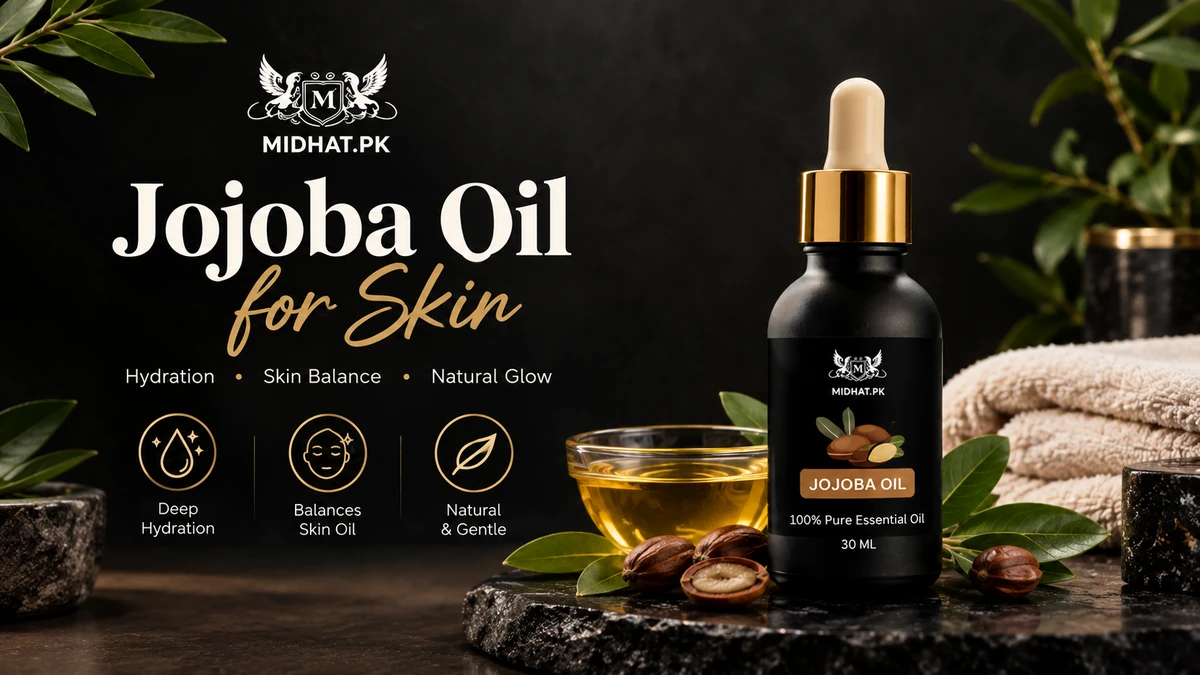
Jojoba Oil for Skin: Benefits, Uses & How to Apply
Jojoba oil for skin is a popular choice for people who want softer, smoother and healthier-looking skin without adding too many products to their daily routine. Whether your face feels dry during winter or you want a simple facial oil, jojoba oil can be a useful addition to your skincare routine.
Extracted from the seeds of the Simmondsia chinensis plant, jojoba oil is technically a liquid wax. Its composition makes it a popular ingredient in moisturizers, facial oils and other skincare products.
If you’re looking for a natural skincare oil, explore Jojoba Oil by Midhat.pk for product details and usage information.
In this guide, you’ll learn about jojoba oil benefits for skin, how to apply it, which skin types may benefit and the precautions to take before using it.
What Is Jojoba Oil?
Jojoba oil comes from the seeds of a desert shrub native to North America. Unlike conventional vegetable oils, it consists primarily of liquid wax esters.
Its emollient properties make it useful for softening the skin and helping reduce moisture loss. Research has also examined jojoba oil’s composition and its cosmetic applications.
For more information about choosing a suitable product, read Midhat’s Best Jojoba Oil in Pakistan guide.
6 Jojoba Oil Benefits for Skin
1. Helps Keep Dry Skin Soft
Jojoba oil acts as an emollient, helping dry or rough skin feel smoother. Applying a small amount after your regular moisturizer may help reduce moisture loss and leave your skin feeling more comfortable.
This can be particularly useful during Pakistan’s cooler, drier months, when skin may feel tight after washing.
According to the American Academy of Dermatology’s moisturizer guide, choosing an appropriate moisturizer is an important part of managing dry skin.
2. Supports the Skin’s Moisture Barrier
Your skin barrier helps retain moisture and protects against environmental irritants. Jojoba oil is commonly used in cosmetic formulations intended to improve skin softness and moisture retention.
For best results, apply it after a gentle cleanser and suitable moisturizer rather than relying on facial oil alone.
If you want to include it in your routine, explore Midhat’s Jojoba Oil for Skin and Face.
3. Improves the Appearance of Dull Skin
Dryness can make your face appear dull and uneven. By improving the feel of dry skin, jojoba oil may help it look smoother and more radiant.
However, it does not permanently lighten your natural skin tone or replace targeted treatments for hyperpigmentation.
If you’re interested in traditional Moroccan skincare ingredients, you can also read Midhat’s
4. Can Be Included in an Oily-Skin Routine
People with oily skin can sometimes benefit from facial oils, depending on the formulation and how their skin responds.
Jojoba oil is often described as lightweight, but this does not guarantee that it will suit everyone with oily or acne-prone skin.
Start with one drop and monitor your skin for breakouts. Avoid applying a thick layer, especially if your face already feels greasy.
The American Academy of Dermatology’s acne moisturizer guide recommends choosing products labeled oil-free or non-comedogenic when managing acne-prone skin.
5. May Help Soothe Dry-Feeling Skin
Jojoba oil can help condition dry-feeling skin, but it should not be used as a substitute for medical treatment.
If your skin is sensitive, patch-test the product before applying it to your entire face. Stop using it if you experience redness, itching or irritation.
6. Fits Into a Simple Skincare Routine
You don’t need several different oils to maintain a basic skincare routine. Jojoba oil can be used as an optional finishing step after moisturizing.
It is also useful for people who prefer ingredients with multiple cosmetic applications. For example, jojoba oil can be applied to dry hair ends as well as dry skin.
You can explore Midhat’s Jojoba Oil Collection to learn more about the available products.
How to Use Jojoba Oil for Skin
You can apply jojoba oil in the morning or evening. The important thing is to use a small quantity and observe how your skin responds.
Method 1: Apply Jojoba Oil to Your Face
Follow these simple steps:
Cleanse your face. Wash with a gentle cleanser and pat your skin lightly with a clean towel.
Apply moisturizer. Choose a product suitable for your skin type.
Add one or two drops of jojoba oil. Gently spread the oil over your face, avoiding your eyes.
Massage gently. Use light, circular motions without rubbing or pulling your skin.
Apply sunscreen in the morning. Use a broad-spectrum sunscreen with SPF 30 or higher.
For this routine, you can use Jojoba Oil by Midhat.pk. Start with a small amount rather than applying a thick layer.
Method 2: Use Jojoba Oil for Dry Skin
If your cheeks or other areas feel particularly dry, apply a small amount of jojoba oil over your regular moisturizer.
Pay attention to areas that feel rough or tight. Avoid applying oil to broken or irritated skin without professional advice.
For additional guidance on managing dryness, consult the American Academy of Dermatology’s moisturizer recommendations.
Method 3: Use Jojoba Oil on Your Body
Jojoba oil isn’t limited to facial skincare. You can also apply a small amount to dry elbows, knees and other areas of the body.
For a simple routine, apply body lotion after bathing and add a few drops of jojoba oil to particularly dry areas.
Jojoba Oil for Different Skin Types
Skin type | How to use jojoba oil |
|---|---|
Dry skin | Apply a few drops after moisturizer to help retain moisture. |
Oily skin | Start with one drop and avoid excessive oil. |
Combination skin | Focus on dry areas rather than your entire face. |
Sensitive skin | Patch-test before regular use. |
Acne-prone skin | Introduce cautiously and monitor for breakouts. |
Is Jojoba Oil Good for Acne-Prone Skin?
Jojoba oil is included in various skincare formulations, but it should not be considered a standalone acne treatment.
If you have active acne, prioritize a gentle cleanser, suitable moisturizer and any treatment recommended by your dermatologist.
The American Academy of Dermatology’s acne skincare advice explains why moisturizing can remain important even when your skin is oily or you’re using acne medication.
Can Jojoba Oil Remove Dark Spots and Pigmentation?
Jojoba oil may improve the appearance of dryness, but it has not been established as a reliable treatment for dark spots, melasma or post-acne pigmentation.
For readers interested in other traditional beauty ingredients, Midhat’s Moroccan Nila Powder guide
explores an ingredient commonly used in Moroccan-inspired skincare routines.
However, traditional cosmetic use should not be confused with proven pigmentation treatment. For pigmentation concerns, daily sunscreen and appropriate dermatologist-recommended treatments are more relevant than relying on cosmetic oils.
Jojoba Oil vs Other Skincare Oils
Jojoba oil differs from many vegetable oils because its composition consists mainly of liquid wax esters.
However, no single facial oil suits everyone. When choosing a product, consider your skin type, whether it contains added fragrance and how your skin responds.
If you’re comparing different options, explore Midhat’s Essential Oils Collection to see its available products.
Remember that concentrated essential oils are different from jojoba oil and may require dilution. They should not automatically be applied directly to facial skin.
How Often Should You Use Jojoba Oil on Your Skin?
Start by applying a small amount two or three evenings per week.
If your skin tolerates it well and benefits from the additional conditioning, you can adjust the frequency.
People with oily or acne-prone skin may prefer occasional application, while those with dry skin may benefit from more frequent use.
There is no need to apply a thick layer or use jojoba oil multiple times a day.
Is Jojoba Oil Safe for Your Face?
Jojoba oil is widely used in skincare, but individual sensitivity and allergic reactions are possible.
Before using it:
Patch-test on a small area.
Avoid applying it near your eyes.
Stop using it if you experience redness, itching or breakouts.
Do not use it as a replacement for sunscreen.
Consult a dermatologist if you have persistent irritation.
Where to Buy Jojoba Oil in Pakistan
If you’re looking for jojoba oil for skin in Pakistan, check the product ingredients, packaging and usage instructions before purchasing.
Midhat offers Jojoba Oil (روغن عناب) for people interested in incorporating this ingredient into their skincare and hair-care routines. You can also read Midhat’s guide to buying jojoba oil in Pakistan for additional product information.
Frequently Asked Questions
1. Is Jojoba Oil Good for Skin?
Yes. Jojoba oil is commonly used as an emollient in skincare products. It can help dry skin feel softer and smoother, although results depend on skin type and product formulation.
2. Can I Apply Jojoba Oil Directly to My Face?
Yes. You can apply a small amount directly to your face after patch-testing. Start with one or two drops and monitor your skin’s response.
3. Does Jojoba Oil Clog Pores?
Jojoba oil is often marketed as non-comedogenic, but no ingredient is guaranteed not to cause breakouts in every person. If you have acne-prone skin, introduce it gradually.
4. Can I Use Jojoba Oil Every Day?
You can use it daily if your skin tolerates it, although daily application isn’t necessary for everyone. Adjust the amount and frequency according to your skin’s needs.
5. Can Jojoba Oil Remove Wrinkles?
Jojoba oil can help moisturize skin, which may temporarily make fine lines caused by dryness less noticeable. It has not been proven to remove wrinkles permanently.
6. Is Jojoba Oil Suitable for Oily Skin?
Some people with oily skin tolerate small amounts of jojoba oil. Start with one drop and stop using it if you notice additional greasiness or breakouts.
7. Should I Apply Jojoba Oil Before or After Moisturizer?
Applying it after moisturizer is a practical approach because the moisturizer provides hydration while the oil can help reduce moisture loss.
Final Thoughts
Jojoba oil for skin can be a useful addition to a simple skincare routine, particularly if your goal is to improve softness and manage dry-feeling skin.
Start with a small amount, use it alongside your regular moisturizer and avoid expecting it to treat acne, pigmentation or other medical skin conditions.
For product details and availability in Pakistan, visit
.
A consistent routine that includes gentle cleansing, moisturizing and daily sunscreen remains essential for maintaining healthy-looking skin.