

Blog
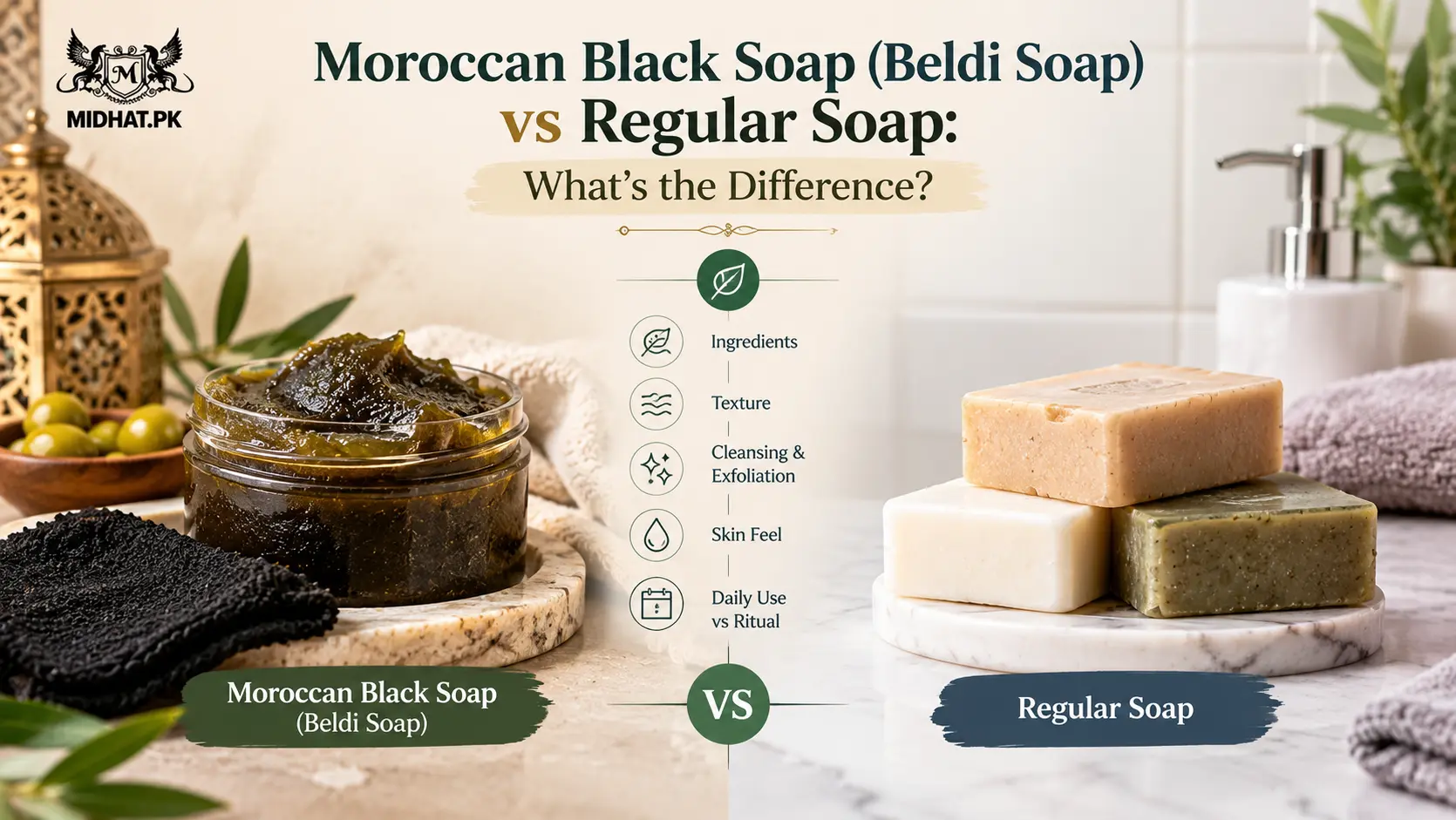
Moroccan Black Soap (Beldi Soap) vs Regular Soap: What’s the Difference?
Moroccan Black Soap vs Regular Soap is a common comparison for people looking to improve their body care routine and explore traditional Moroccan skincare. Although both products are used for cleansing, they differ in their ingredients, texture, application methods, and role in a skincare routine.
Moroccan Black Soap, also known as Beldi Soap, is a traditional Moroccan hammam product commonly made with olive-derived ingredients. It has a thick, paste-like consistency and is often used before exfoliating with a Kessa glove. Regular soap, on the other hand, is available in many forms, including solid bars, liquid cleansers, and body washes.
So, which option is better for your skin? The answer depends on your skin type, cleansing needs, and whether you want a simple daily wash or a traditional exfoliation ritual. In this guide, we will compare both options to help you make an informed choice, especially if you are shopping for Moroccan skincare products in Pakistan.
What Is Moroccan Black Soap (Beldi Soap)?
Moroccan Black Soap is a traditional cleansing product associated with Morocco’s hammam, or steam-bath, ritual. Unlike the conventional solid soap bar, authentic traditional Beldi Soap is usually a soft, dark paste made primarily with olive oil and olive-derived ingredients. Formulations can vary by manufacturer.
Its paste-like consistency makes it easy to spread over damp skin. During a traditional hammam routine, the soap is applied to the body, rinsed off, and followed by exfoliation using a Kessa glove.
Beldi Soap is valued for its role in this cleansing and exfoliation routine. However, the results depend on the formulation, how gently you use the exfoliating glove, and your individual skin sensitivity.
Learn more about the tradition in our guide to Moroccan Black Beldi Soap and how it works.
What Is Regular Soap?
Regular soap refers to the everyday cleansing products people commonly use for bathing and washing. These include traditional soap bars, beauty bars, liquid hand soaps, and body washes.
Traditional soap is generally produced by combining fats or oils with an alkali. Many modern cleansing bars and body washes instead use synthetic detergents, even though consumers often call them soap.
According to the US Food and Drug Administration, products marketed as soap can differ considerably in composition and regulatory classification. Therefore, the ingredients and label are more informative than the product’s name alone. Read the FDA’s frequently asked questions about soap.
Regular soap is convenient for daily hygiene, but its effects on the skin depend on its formulation. Some products are gentle and moisturizing, while others may leave dry or sensitive skin feeling tight.
Moroccan Black Soap vs Regular Soap: Key Differences
| Feature | Moroccan Black Soap (Beldi Soap) | Regular Soap |
|---|---|---|
| Texture | Usually a thick, soft paste | Bar, liquid, gel, or body wash |
| Typical ingredients | Olive oil or olive-derived ingredients; formulas vary | Oils, fats, detergents, fragrances, and other ingredients, depending on the product |
| Main purpose | Cleansing as part of a traditional hammam routine | Everyday cleansing and hygiene |
| Exfoliation | Commonly paired with a Kessa glove | Usually cleanses without a dedicated exfoliation step |
| Application | Spread over damp skin and rinsed as directed | Lathered or applied according to product instructions |
| Best use case | People interested in a traditional body-care ritual | People seeking a convenient daily cleanser |
The main distinction is not that one product is universally superior. It is that Beldi Soap is associated with a particular cleansing and exfoliation ritual, whereas regular soap is designed primarily for convenient everyday washing.
5 Important Differences Between Beldi Soap and Regular Soap
1. Ingredients and Formulation
Traditional Beldi Soap commonly uses olive oil and olive-derived ingredients, although commercial products may contain additional oils, fragrances, or other ingredients.
Regular soap and cleansing bars have a much wider range of formulations. Some contain traditional soap ingredients, while others use synthetic cleansing agents.
When choosing either product, read the ingredient list carefully. Avoid assuming that a product is completely natural or chemical-free simply because it is labelled Moroccan, traditional, or herbal.
2. Texture and Application
One of the easiest differences to notice is texture.
Beldi Soap generally has a smooth, gel-like or paste-like consistency. You can spread a small amount over damp skin and follow the instructions on the packaging.
Regular soap is often a solid bar or a liquid product that lathers when combined with water.
The texture affects how each product is applied, but it does not automatically determine cleansing performance or suitability for sensitive skin.
3. Cleansing and Exfoliation
Regular soap is primarily used to remove everyday dirt, sweat, and surface oils.
Moroccan Black Soap is commonly used as the first step in a traditional hammam exfoliation routine. After the soap is rinsed off, a Kessa glove may be used to remove loosened dead skin cells through gentle physical exfoliation.
Important: Beldi Soap does not need to be scrubbed aggressively to work as a cleanser. The exfoliation step is separate, and excessive rubbing can cause irritation. Avoid using an exfoliating glove on inflamed, broken, sunburned, or irritated skin.
4. Skin Feel After Washing
Some people prefer Beldi Soap because they enjoy its rich texture and the feel of their skin after a hammam routine. However, the result depends on the formula and how the product is used.
Regular soap can also leave skin feeling comfortable when it contains a suitable cleansing and moisturizing formula.
If your skin feels persistently tight, itchy, or dry after washing, consider switching to a gentler cleanser and applying moisturizer while your skin is still slightly damp. The American Academy of Dermatology recommends gentle cleansing and regular moisturizing for people dealing with dry skin. See its dermatologist-recommended tips for relieving dry skin.
5. Daily Use vs a Hammam Routine
Regular soap is convenient for everyday bathing. You can choose a product based on your skin’s needs, fragrance preferences, and cleansing habits.
Beldi Soap is often used less like an ordinary soap bar and more like part of a dedicated body-care ritual. You apply it, rinse it, and optionally follow with a Kessa glove for exfoliation.
You do not necessarily need to use an exfoliating glove every time you bathe. For many people, occasional gentle exfoliation is sufficient, and those with sensitive skin may prefer to avoid physical exfoliation altogether.
Which Soap Is Better for Your Skin Type?
The best choice depends on your skin’s needs rather than the product’s popularity.
- Dry skin: Consider a gentle, moisturizing, fragrance-free cleanser. Follow up with a suitable moisturizer.
- Oily skin: Choose a cleanser that removes excess oil without leaving your skin uncomfortably tight.
- Sensitive skin: Look for fragrance-free products and introduce new skincare products cautiously. Avoid vigorous scrubbing.
- Rough body skin: Beldi Soap paired with a Kessa glove may be an option if your skin tolerates physical exfoliation.
- Simple daily hygiene: A well-formulated regular soap or body wash may be all you need.
If you have eczema, persistent irritation, or another skin condition, ask a qualified healthcare professional which cleansing products are appropriate for you.
How to Use Moroccan Black Soap at Home
To experience a traditional-inspired hammam routine, follow these steps while checking your product’s specific directions.
- Prepare your skin: Wet your body with warm water.
- Apply the soap: Spread a small amount of Beldi Soap over the intended area.
- Follow the instructions: Leave it on only for the recommended time, if the product calls for this.
- Rinse thoroughly: Remove all remaining soap with lukewarm water.
- Exfoliate carefully: If suitable for your skin, use a Kessa glove gently. Stop if you experience pain or burning.
- Moisturize: Pat your skin dry and apply a moisturizer.
For beginners, start with the body rather than assuming a product formulated for body use is suitable for the face. Avoid contact with the eyes and discontinue use if irritation develops.
Where to Buy Moroccan Black Soap in Pakistan
If you want to explore traditional Moroccan body care, choose a seller that provides clear ingredient information, directions for use, and accessible customer support.
Midhat.pk offers Moroccan Black Beldi Soap. Visit the product page to review the available details and decide whether it fits your skincare routine.
You can also read our existing guide to Moroccan Black Soap in Pakistan for more information about its traditional uses.
Before purchasing, review the ingredient list, packaging, and product-specific instructions. A higher price or a traditional origin claim alone does not guarantee that a product will suit your skin.
Frequently Asked Questions
Is Moroccan Black Soap better than regular soap?
Neither is universally better. Beldi Soap is commonly used in a traditional hammam cleansing and exfoliation routine, while regular soap is convenient for everyday hygiene. Your skin type and the formulation matter most.
Can I use Moroccan Black Soap every day?
Follow the directions for your specific product. Daily use may not be necessary, particularly if you also exfoliate. Reduce use if your skin becomes dry or irritated.
Does Beldi Soap remove dead skin cells?
Beldi Soap is traditionally used before exfoliation with a Kessa glove. The glove provides the physical exfoliation; the soap itself should not be treated as a guaranteed solution for every skin-texture concern.
Can I use Moroccan Black Soap on my face?
Do not assume every Beldi Soap formula is suitable for facial skin. Check the label, consider your skin sensitivity, and avoid applying it to irritated skin or near your eyes.
Can regular soap cause dry skin?
Some cleansing products can leave skin dry or irritated, particularly if they are harsh or fragranced. A gentle cleanser and moisturizer may be a better choice for dry or sensitive skin.
Final Thoughts
When comparing Moroccan Black Soap vs Regular Soap, the biggest differences are texture, formulation, and how each product fits into your body-care routine. Traditional Beldi Soap is a paste commonly used in Moroccan hammam rituals, often followed by exfoliation with a Kessa glove. Regular soap and body washes offer a convenient approach to everyday cleansing.
You do not have to choose one exclusively. You may prefer a regular cleanser for daily washing and reserve Beldi Soap for occasional body-care sessions, provided your skin tolerates it.
If you are ready to explore traditional Moroccan skincare, visit Midhat.pk and review the Moroccan Black Beldi Soap range to find an option that suits your preferences and routine.