Blog
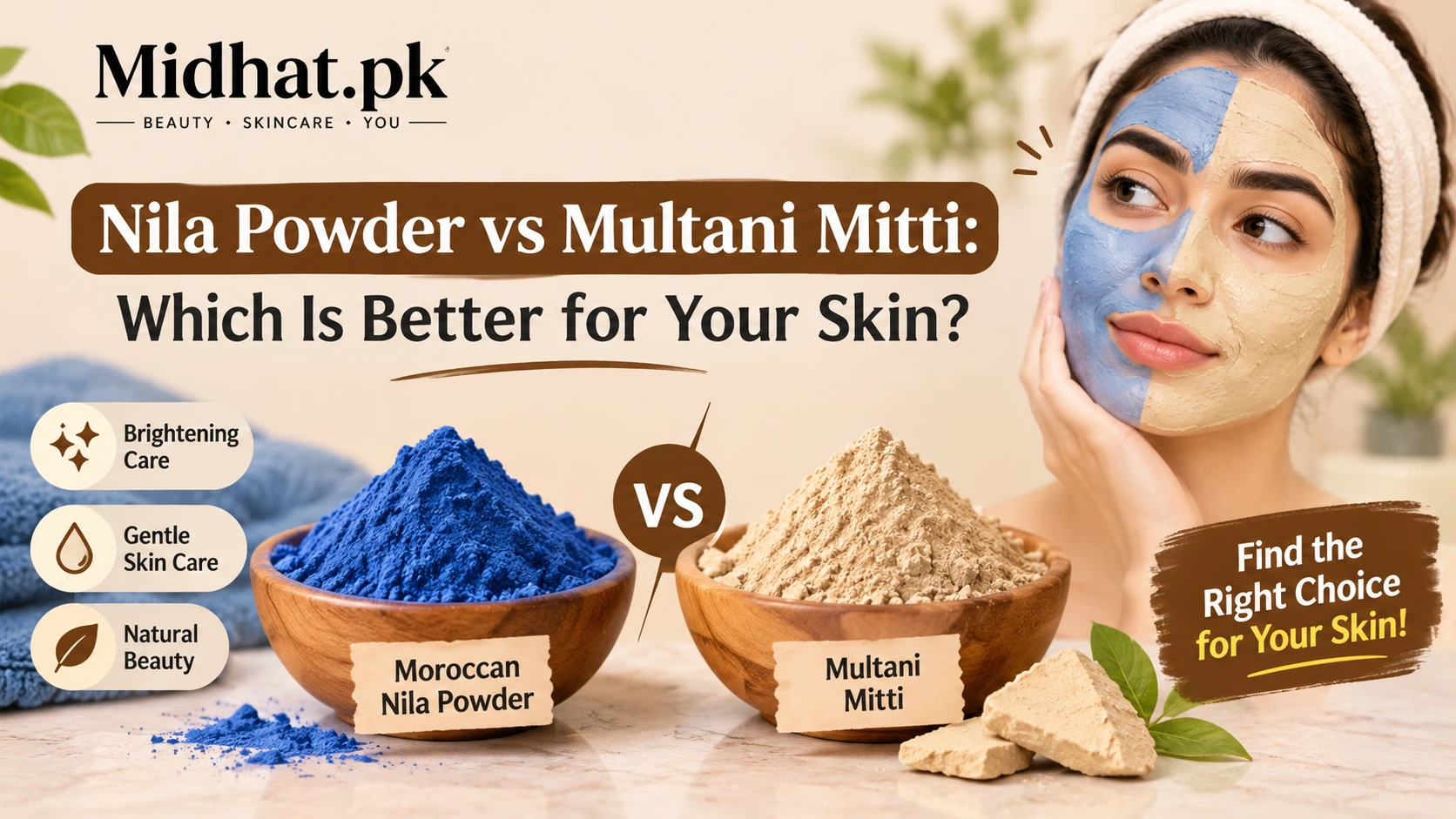
Nila Powder vs Multani Mitti: Which Is Better for Your Skin?
Natural skincare ingredients have been part of traditional beauty routines for generations. Two popular choices in Pakistan are Moroccan Nila Powder and Multani Mitti. Both are commonly used in homemade face masks, but they have different origins, properties, and traditional skincare uses.
If you are comparing Nila Powder vs Multani Mitti, you may be wondering which one is better for oily skin, dryness, dullness, or uneven-looking skin.
The answer depends on what you want from your skincare routine. Multani Mitti, also known as Fuller’s Earth, is a mineral clay traditionally used to absorb excess surface oil. Moroccan Nila Powder is a blue cosmetic powder associated with Moroccan beauty rituals and is commonly used in face and body masks.
In this guide, we will compare their differences, potential skincare benefits, suitable skin types, and ways to use them safely so you can make a more informed choice.
What Is Moroccan Nila Powder?
Moroccan Nila Powder is a blue-colored cosmetic powder associated with traditional Moroccan skincare and beauty practices. It is commonly incorporated into face masks and body-care preparations.
Products sold as Nila Powder can vary in their sourcing and composition, so checking the ingredient information is important.
Midhat’s Moroccan Nila Powder is marketed as a Moroccan-inspired beauty powder for face and body care.
Potential Uses of Nila Powder
Moroccan Nila Powder is traditionally used for:
- Face masks as part of a beauty routine.
- Body-care preparations.
- Moroccan-inspired skincare rituals.
- Helping skin look fresher and brighter after cleansing.
- Cosmetic routines focused on a more even-looking complexion.
However, there is limited clinical evidence establishing Nila Powder itself as a treatment for pigmentation or permanent skin whitening. It should be viewed as a traditional cosmetic ingredient rather than a guaranteed skin-lightening solution.
For more information, read our guide to Moroccan Nila Powder benefits, uses, and how to use it.
What Is Multani Mitti?
Multani Mitti, commonly called Fuller’s Earth, is a naturally occurring mineral clay traditionally used in South Asian skincare.
It is popular in Pakistan because it is affordable, widely available, and easy to prepare as a face mask. Its main cosmetic appeal is its ability to absorb oil from the skin’s surface.
Potential Uses of Multani Mitti
Multani Mitti is traditionally used for:
- Absorbing excess surface oil.
- Helping skin feel cleaner after washing.
- Removing surface dirt when used as a rinse-off mask.
- Creating homemade face packs.
- Providing a temporary matte appearance.
Its composition can vary depending on the source. Research on Multani Mitti as a specific skincare treatment remains limited, so traditional uses should not be confused with clinically proven treatments for acne, dark spots, or other skin conditions.
Nila Powder vs Multani Mitti: Key Differences
Although both powders are used in traditional skincare, they are not interchangeable.
| Feature | Moroccan Nila Powder | Multani Mitti |
|---|---|---|
| Appearance | Usually blue | Usually beige, grey, or earthy |
| Origin | Associated with Moroccan beauty traditions | Mineral clay used in South Asian traditions |
| Main cosmetic use | Face and body masks | Oil-absorbing face masks |
| Common skincare goal | Fresher, brighter-looking skin | Reducing excess surface oil |
| Traditional use | Moroccan-inspired beauty rituals | Traditional cleansing and face packs |
| Skin-type consideration | Depends on product and formulation | Often preferred by oily skin |
| Evidence | Limited clinical evidence for specific Nila benefits | Limited clinical evidence for specific Multani Mitti benefits |
The biggest difference is their traditional purpose. Nila is associated with Moroccan cosmetic routines, while Multani Mitti is mainly valued for its oil-absorbing properties.
5 Important Differences Between Nila Powder and Multani Mitti
1. Different Origins and Ingredients
Nila Powder is associated with Moroccan beauty practices and is sold as a blue cosmetic powder. Its actual composition should be checked on the product label.
Multani Mitti is a mineral clay, commonly referred to as Fuller’s Earth. Its mineral composition may vary depending on where it is sourced.
This means you should not assume that both powders contain the same ingredients or work in the same way.
2. Different Effects on Skin
Multani Mitti is generally chosen by people who want to absorb excess surface oil and achieve a temporary matte feel.
Nila Powder is more commonly selected for Moroccan-inspired face and body masks, especially in routines focused on a fresh and brighter-looking complexion.
Neither ingredient should be expected to permanently change your natural skin colour.
3. Different Suitability for Skin Types
People with oily skin may prefer Multani Mitti because of its oil-absorbing properties.
People interested in traditional Moroccan skincare may prefer Nila Powder.
However, neither powder is automatically suitable for every skin type. Both can cause discomfort or dryness depending on the product, application, and individual skin sensitivity.
4. Different Face Mask Preparations
Multani Mitti is often mixed with water or another suitable liquid to create a paste.
Nila Powder is also commonly mixed with a suitable base, such as plain yogurt or aloe vera gel, depending on the product instructions.
Keep homemade mixtures simple, and avoid combining multiple potentially irritating ingredients.
5. Different Skincare Expectations
Multani Mitti is primarily used as an oil-absorbing cosmetic ingredient.
Nila Powder is traditionally associated with Moroccan beauty rituals and cosmetic brightening routines.
It is important to have realistic expectations. Neither powder is a proven substitute for dermatologist-recommended treatments for persistent acne, pigmentation, or other skin concerns.
Which Is Better for Different Skin Types?
Choosing between Nila Powder and Multani Mitti becomes easier when you consider your skin type.
For Oily Skin
Multani Mitti may be the more practical choice if your main concern is excess surface oil.
Its absorbent properties can help reduce the appearance of shine temporarily.
However, avoid using it too frequently or allowing the mask to become uncomfortably dry. Excessive use may leave your skin feeling tight.
For Dry Skin
If your skin is dry, both powders require caution.
Multani Mitti may absorb too much surface oil and make dryness more noticeable. Nila Powder should also not be assumed to moisturise the skin.
If you use either powder, choose a gentle preparation and follow it with a suitable moisturiser.
For Combination Skin
Combination skin may benefit from a more targeted approach.
If you want to try Multani Mitti, consider applying it only to oilier areas rather than the entire face. Avoid applying it to dry or irritated patches.
Nila Powder can also be considered as an occasional mask if your skin tolerates the particular product.
For Sensitive Skin
People with sensitive skin should be particularly careful with homemade masks.
Natural ingredients can still cause irritation or allergic reactions. Patch-test a new preparation first, and avoid applying it to broken, inflamed, or irritated skin.
If you frequently experience redness, itching, or burning, consult a dermatologist before introducing new masks.
How to Use Nila Powder and Multani Mitti Safely
Both powders are generally used as rinse-off preparations. The following approaches are simple starting points, provided the product is intended for facial use.
How to Use Moroccan Nila Powder
- Clean your face with a gentle cleanser.
- Take a small quantity of cosmetic-grade Nila Powder.
- Mix it with a suitable base, following the product instructions.
- Apply a thin layer while avoiding the eyes and lips.
- Leave it on only for the recommended time.
- Rinse gently with lukewarm water.
- Apply a suitable moisturiser.
You can also follow Midhat’s detailed step-by-step guide to using Nila Powder.
How to Use Multani Mitti
- Take a small quantity of cosmetic-grade Multani Mitti.
- Add clean water gradually to make a smooth paste.
- Apply a thin layer to clean skin.
- Avoid the eye area and any irritated or broken skin.
- Rinse before the mask becomes uncomfortably dry.
- Apply moisturiser afterward.
Do not scrub either mask off aggressively. Start with occasional use and adjust based on your skin’s response.
Can You Mix Nila Powder and Multani Mitti Together?
Although both ingredients are used in traditional face masks, mixing them together does not automatically make a more effective skincare treatment.
Combining powders can also make it harder to identify which ingredient is causing irritation or dryness.
If you are new to either product, try them separately first. This helps you understand how your skin responds to each one.
Avoid experimenting with several new ingredients at the same time.
Important Safety Tips Before Using Natural Face Masks
Keep these precautions in mind when adding traditional powders to your routine:
- Patch-test first: Test a small amount on a discreet area before applying it to your face.
- Choose cosmetic-grade products: Avoid powders sold without clear ingredient or sourcing information.
- Avoid damaged skin: Do not apply masks to wounds, sunburn, or irritated areas.
- Don’t overuse masks: More frequent application does not necessarily produce better results.
- Avoid inhaling powder: Mix powders carefully and avoid creating airborne dust.
- Moisturise afterward: Use a suitable moisturiser to maintain skin comfort.
- Stop if irritation develops: Wash the product off if you experience burning, itching, or stinging.
The American Academy of Dermatology also recommends choosing masks according to your skin’s needs and patch-testing new products. Read its guide on how to use facial masks safely.
Frequently Asked Questions
1. Is Nila Powder better than Multani Mitti?
Neither is universally better. Multani Mitti is commonly preferred for absorbing excess surface oil, while Nila Powder is used in traditional Moroccan-inspired face and body masks. Your choice depends on your skin type and skincare goals.
2. Can I use Nila Powder and Multani Mitti every day?
Daily use is not necessary. Frequent powder masks may cause dryness or irritation. Start with occasional use and follow the instructions for your particular product.
3. Which is better for oily skin: Nila Powder or Multani Mitti?
Multani Mitti may be a more practical option for oily skin because of its oil-absorbing properties. However, it should be used carefully to avoid excessive dryness.
4. Which powder is better for dry skin?
Neither powder is specifically a moisturiser. People with dry skin should prioritise gentle cleansing and moisturising. If trying either mask, use a gentle preparation and monitor your skin carefully.
5. Can Nila Powder and Multani Mitti remove dark spots?
Neither should be considered a proven dark-spot treatment. Persistent pigmentation may require targeted skincare and professional assessment. Daily broad-spectrum sunscreen with SPF 30 or higher is also important.
6. Can I mix Nila Powder with Multani Mitti?
You may see homemade recipes combining different powders, but there is no strong clinical evidence that combining these two creates better results. Try each ingredient separately before experimenting with mixtures.
7. Where can I buy Moroccan Nila Powder in Pakistan?
You can explore Moroccan Nila Powder by Midhat.pk and review its product details and usage information before purchasing.
Conclusion
When comparing Nila Powder vs Multani Mitti, the better option depends on what you want from your skincare routine.
Multani Mitti is traditionally valued for absorbing excess surface oil, making it a popular choice for people with oily skin. Moroccan Nila Powder is associated with traditional Moroccan beauty practices and is commonly used in face and body masks.
Neither powder is a guaranteed treatment for acne, pigmentation, or permanent skin whitening. Choose a product with clear ingredient information, patch-test before use, and avoid overusing homemade masks.
If you are interested in exploring Moroccan-inspired skincare, discover Moroccan Nila Powder at Midhat.pk and read the product instructions before adding it to your routine.