

Blog
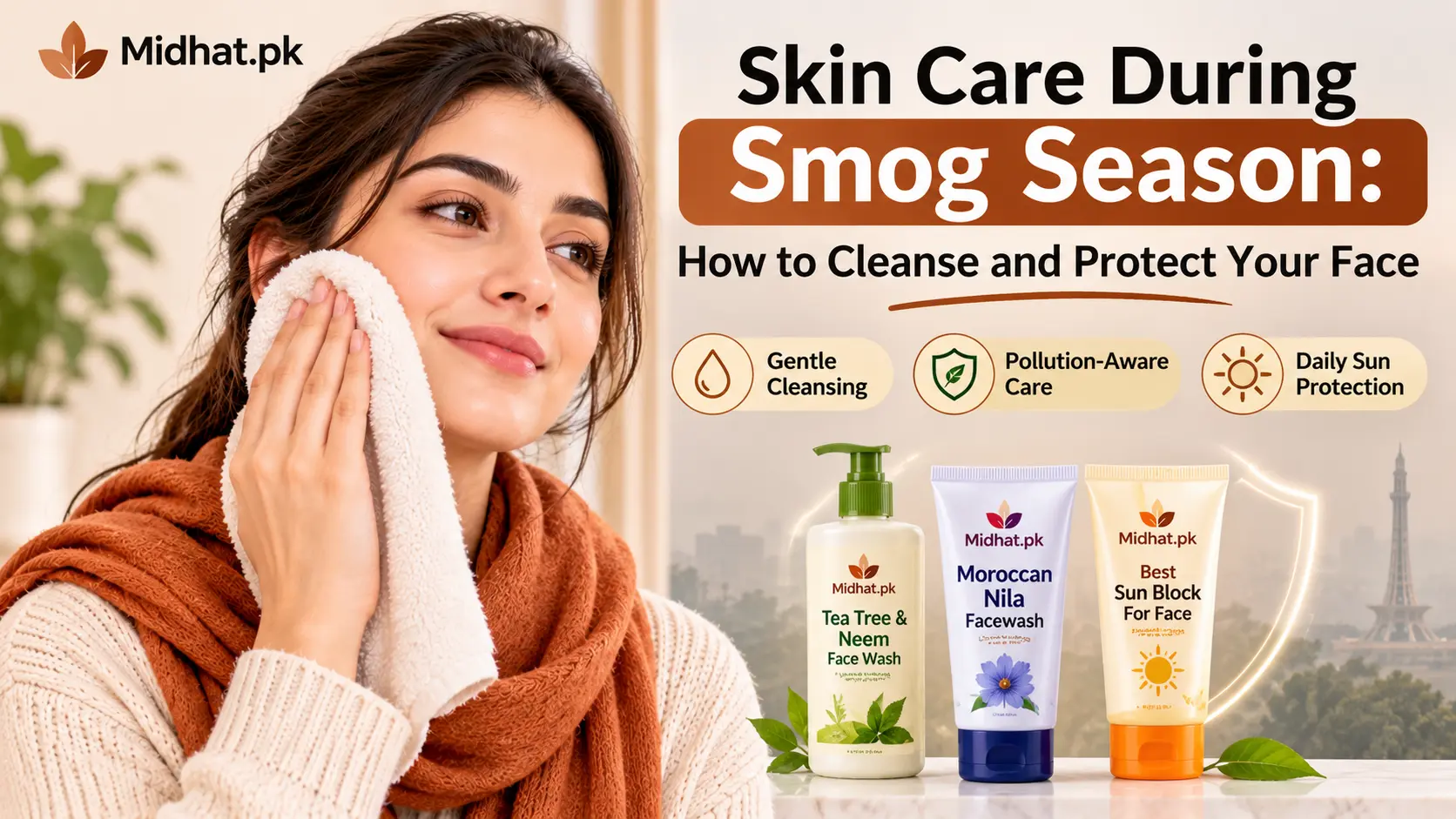
Skin Care During Smog Season: How to Cleanse and Protect Your Face
Skin care in smog comes down to a few habits: cleanse your face gently every evening to remove dust and grime, apply a barrier-supporting moisturizer, wear sunscreen in the morning, and avoid scrubbing or harsh products. Keep skin hydrated and limit time outdoors on heavily polluted days.
When smog covers Pakistan, your skin feels it too: dullness, dryness, itching and breakouts are common complaints. This guide to skin care in smog shows what pollution does to your skin and gives you a simple, gentle routine to cleanse and protect your face without over-drying it.
How does smog affect your skin?
Smog leaves a film of fine dust, soot and chemical particles on your skin. This can clog pores, irritate the skin and make it feel dull, dry or sensitive, especially if your skin barrier is already weak.
The American Academy of Dermatology reports that short-term exposure to air pollution from wildfire smoke can flare skin conditions such as eczema and psoriasis. Smog is not identical to wildfire smoke, but if your skin is already sensitive, expect more irritation on high-pollution days.
Common signs that smog is bothering your skin:
- A dull, gritty or tired-looking complexion
- Tightness, dryness or itching
- More clogged pores or breakouts
- Redness or stinging with products that were fine before
If your skin feels raw or stings often, your barrier may need support. Start with our guide to skin barrier repair in Pakistan.
Skin care in smog: how to cleanse and protect your face
Evening: remove the day’s grime
- Rinse first. Splash your face with lukewarm water to lift loose dust before you touch the skin.
- Cleanse gently. Use a mild, fragrance-free cleanser and massage for about 30 to 60 seconds. If you wear sunscreen or makeup, cleanse twice: first to remove it, then to clean the skin.
- Pat dry. Use a clean towel and don’t rub.
- Soothe and hydrate. Apply a calming layer such as aloe vera gel while the skin is still damp.
- Moisturize. Seal with a cream that supports the skin barrier. Our guide to the best moisturizer for skin in Pakistan can help you choose.
Morning: protect before you step out
- Cleanse lightly or rinse. Avoid over-washing, which dries the skin.
- Moisturize. A well-hydrated barrier handles irritation better.
- Apply sunscreen. Smog days are still UV days. See how to pick one in our post on the best sunblock in Pakistan.
Daily habits that help
- Keep your face covered with a mask or scarf outdoors, and avoid touching your face with unwashed hands.
- Stay indoors on very smoggy days when you can. The AAD notes that staying indoors and using an indoor air purifier may help, though more research is needed.
- Wash pillowcases and towels often, since they collect dust.
- Drink enough water and keep your overall routine simple. For the full picture, read our complete skin care routine guide.
Common smog-season skin care mistakes
- Scrubbing hard. It damages the barrier and makes irritation worse.
- Washing too often. Over-cleansing strips natural oils; stick to once or twice a day.
- Using hot water. Lukewarm is gentler.
- Piling on new products. Smog season is a time to simplify, not experiment.
- Skipping moisturizer and sunscreen. Both help your skin cope with irritation.
FAQs
How do I clean my face after smog exposure?
Rinse with lukewarm water, cleanse gently with a mild cleanser, pat dry and moisturize. If you wore sunscreen, cleanse twice to remove it fully.
Does smog cause pimples and breakouts?
Smog particles and dirt can sit on the skin and clog pores, which may lead to breakouts in some people. Gentle nightly cleansing helps, and avoid picking at spots.
Can smog make skin conditions like eczema worse?
It can. The American Academy of Dermatology notes that short-term exposure to air pollution from wildfire smoke can flare eczema and psoriasis. See a dermatologist if your condition worsens.
Should I wear sunscreen on smoggy days?
Yes. Smog doesn’t block UV completely, so apply sunscreen every morning on exposed skin.
Do I need a special anti-pollution product?
Not necessarily. A gentle cleanser, a good moisturizer and sunscreen cover the basics. Add extra products only if your skin tolerates them.
When should I see a dermatologist?
See a board-certified dermatologist if you have persistent itching, redness, rashes or breakouts that don’t improve with a simple routine.
Final Thoughts
Smog season is hard on skin, but a simple routine works best: rinse, cleanse gently, moisturize, wear sunscreen and avoid harsh scrubbing. Be consistent, keep products minimal, and get professional help if irritation persists.