

Blog
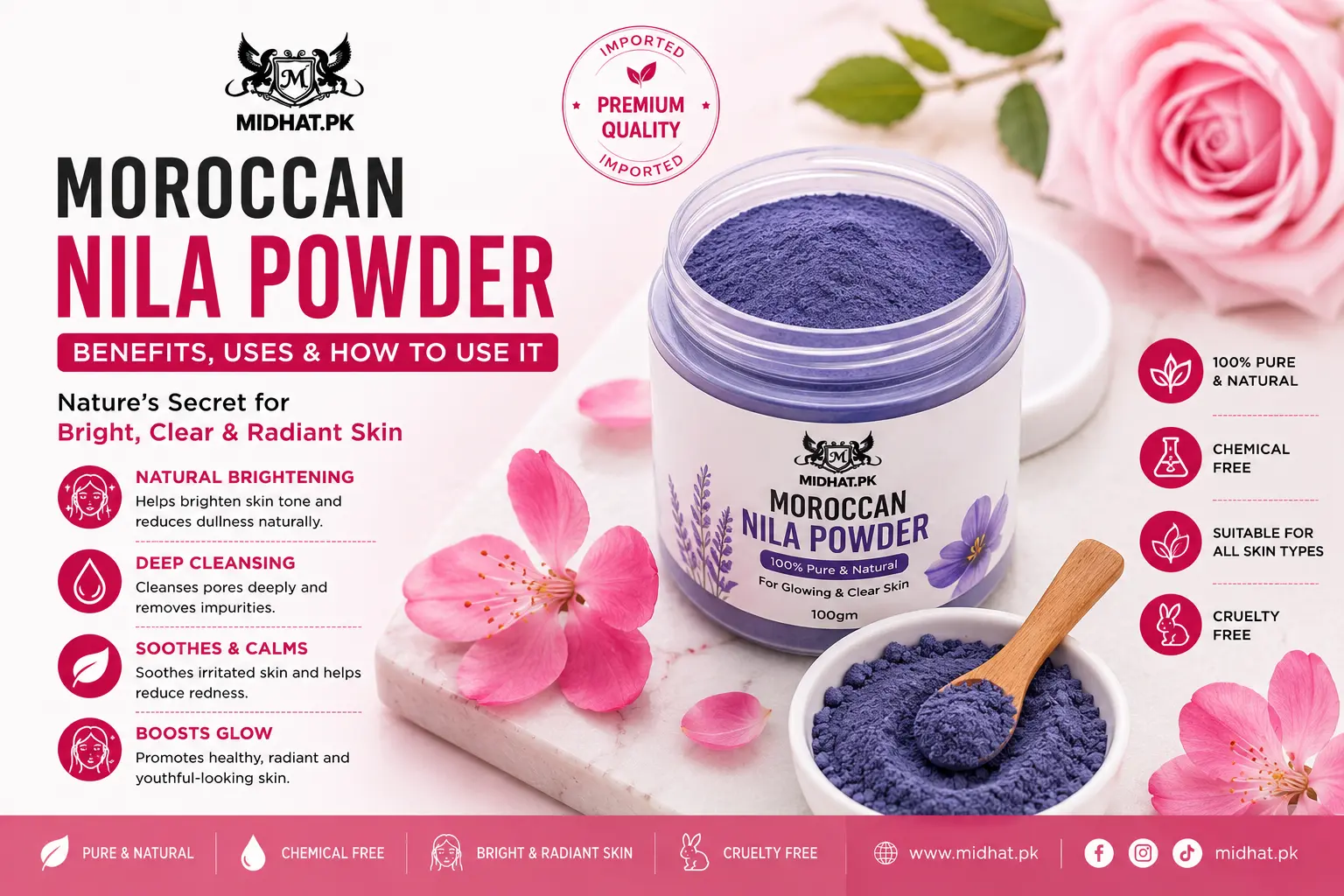
Moroccan Nila Powder Benefits: Uses, Skin Benefits & How to Use It
Moroccan Nila Powder has become increasingly popular among people looking for traditional and natural skincare options. Known for its distinctive blue color, Nila Powder is commonly associated with Moroccan beauty rituals and is used in face and body care routines.
But what are the actual Moroccan Nila Powder benefits? Does it really brighten the appearance of skin? How should you use it, and what should you know before adding it to your skincare routine?
In this guide, we’ll explain what Moroccan Nila Powder is, its traditional uses, potential skincare benefits, how to use it, and how to choose a quality product in Pakistan.
What Is Moroccan Nila Powder?
Moroccan Nila Powder, also called Blue Nila or simply Nila Powder, is a blue-colored cosmetic ingredient associated with traditional Moroccan beauty practices.
The term “Nila” can refer to different materials depending on the product and supplier, so it is important to check the ingredient and sourcing information before purchasing. True indigo is associated with plants in the Indigofera genus, including Indigofera tinctoria.
Nila has become especially popular in skincare because of its traditional association with Moroccan beauty rituals and its use in masks and body treatments.
Midhat currently sells Moroccan Nila Powder in Pakistan and describes its product as a traditional Moroccan beauty powder intended for face, body, and hair care.
What Are the Benefits of Moroccan Nila Powder?
The popularity of Moroccan Nila Powder comes from its traditional use and the way it is incorporated into simple beauty routines.
Here are some of the most commonly discussed benefits.
1. Helps Give Skin a Brighter-Looking Appearance
One of the most popular reasons people search for Moroccan Nila Powder benefits is its association with skin brightening.
Nila is traditionally used in beauty rituals to help improve the appearance of dull-looking skin. When incorporated into a suitable face mask, it can become part of a routine focused on making the skin appear fresher and more radiant.
However, it is important to understand what “brightening” means.
Nila Powder should not be viewed as a product that permanently changes your natural skin color. Current expert discussions also point out that there isn’t strong clinical evidence proving that Moroccan Nila itself permanently lightens hyperpigmentation.
A more realistic goal is cleaner-looking, smoother, and more radiant skin.
2. Supports a More Even-Looking Complexion
Uneven-looking skin can be caused by sun exposure, previous acne, dryness, irritation, and other factors.
A traditional Nila mask may be used as part of a broader skincare routine designed to improve the appearance of dull or uneven skin.
If pigmentation is your primary concern, however, don’t rely on Nila Powder alone. Identifying the cause of pigmentation and protecting the skin from sunlight are important parts of a complete routine.
The American Academy of Dermatology recommends broad-spectrum sunscreen with SPF 30 or higher as part of protecting skin from UV exposure.
3. Can Be Used as a Traditional Face Mask
Another reason Nila Powder is popular is its versatility.
It can be mixed with suitable ingredients to create a simple face mask. Depending on your skin type and the other ingredients used, people commonly combine traditional powders with ingredients such as rose water or yogurt.
For beginners, keeping the mixture simple is usually better than combining many ingredients at once.
A basic approach is:
Nila Powder + a suitable liquid → mix into a smooth paste → apply evenly → rinse gently.
Always avoid the eye area.
4. Can Be Used for Body Care
Moroccan Nila Powder isn’t limited to facial skincare.
Traditional Moroccan beauty routines often include body-care rituals, and Nila is sometimes incorporated into body masks or treatments.
It can be particularly appealing for people who want to create a spa-inspired skincare routine at home.
You can use it on areas such as the arms, legs, elbows, or other areas where the skin appears dull or dry, provided the product is intended for that use and your skin tolerates it.
5. Fits Into a Moroccan-Inspired Beauty Routine
Moroccan beauty has become popular internationally because of its emphasis on traditional ingredients and ritual-based skincare.
Nila is often discussed alongside other Moroccan beauty ingredients such as:
- Argan oil
- Moroccan black soap
- Aker Fassi
- Rhassoul clay
- Rose water
Midhat also offers Moroccan beauty products that can be incorporated into different skincare routines.
For example, you can explore related products through the Midhat skincare collection.
6. May Help Skin Feel Softer When Used in a Suitable Routine
Nila Powder is often incorporated into masks alongside moisturizing or soothing ingredients.
The overall experience can leave the skin feeling cleaner and softer, although this can depend heavily on what the powder is mixed with and how often it is used.
If your skin becomes tight or dry after using a powder mask, reduce the frequency and consider following with a suitable moisturizer.
Does Moroccan Nila Powder Really Whiten Skin?
This is one of the most important questions surrounding Nila Powder.
The answer requires some clarification.
Moroccan Nila Powder is widely marketed online for skin whitening and pigmentation, but strong scientific evidence proving that Nila itself permanently reduces melanin or whitens human skin is currently lacking. Experts quoted in recent coverage have specifically questioned these claims.
Therefore, it is better to describe Nila as a traditional brightening skincare ingredient rather than a guaranteed skin-whitening treatment.
Healthy skincare should focus on maintaining the skin barrier and achieving a naturally healthy-looking complexion rather than trying to alter your natural skin color.
How to Use Moroccan Nila Powder
If you’re using Midhat’s Moroccan Nila Powder as a face mask, a simple routine can be:
Step 1: Clean Your Face
Wash your face with a gentle cleanser and pat it dry.
Step 2: Prepare the Mask
Place a small amount of Nila Powder in a clean bowl.
Add a suitable liquid such as rose water and mix until you get a smooth paste.
Step 3: Apply Carefully
Apply a thin, even layer to clean skin.
Avoid the eyes, lips, and any broken or irritated areas.
Step 4: Leave It on Briefly
Do not assume that leaving a mask on for a very long time will produce better results.
Follow the instructions supplied with your particular product.
Step 5: Rinse
Rinse thoroughly with lukewarm water.
Avoid aggressive scrubbing.
Step 6: Moisturize
After rinsing, apply a suitable moisturizer if your skin feels dry or tight.
Step 7: Use Sunscreen During the Day
If you’re using Nila as part of a brightening-focused routine, sunscreen is especially important.
How Often Should You Use Moroccan Nila Powder?
There isn’t one scientifically established frequency that works for everyone.
Your ideal frequency depends on:
- Skin type
- Product formulation
- Other products in your routine
- Skin sensitivity
- How your skin responds
If you’re new to Nila Powder, start conservatively rather than using it every day.
A simple weekly routine can be easier for beginners to tolerate.
Should You Patch Test Nila Powder?
Yes.
Natural does not automatically mean risk-free.
Plant-based and botanical ingredients can cause irritation or allergic reactions in some people. Recent reporting on Nila skincare has also highlighted the possibility of irritation and allergic reactions, particularly when the material is poorly processed or mixed with unsuitable ingredients.
Before applying a new product over your entire face, test a small amount on an inconspicuous area and monitor your skin.
If you develop significant irritation, burning, swelling, or another concerning reaction, discontinue use.
How to Choose Original Moroccan Nila Powder in Pakistan
The growing popularity of Nila Powder means shoppers should pay attention to product quality.
When choosing a product, check:
Origin
Look for clear information about where the product comes from.
Ingredients
A reputable seller should provide meaningful product information rather than simply calling the powder a “secret formula.”
Packaging
Check the packaging, labeling, weight, and product information.
Seller Reputation
Purchase from a seller that provides identifiable business information and customer support.
Midhat’s current Moroccan Nila Powder product page provides product details and identifies the product as Moroccan Nila Powder.
You can check the product here:
Moroccan Nila Powder by Midhat
Moroccan Nila Powder vs Regular Face Masks
Nila Powder is different from a conventional ready-made face mask because it is generally prepared before application.
| Feature | Moroccan Nila Powder | Ready-Made Face Mask |
|---|---|---|
| Format | Powder | Pre-formulated |
| Preparation | Requires mixing | Ready to apply |
| Traditional use | Moroccan beauty rituals | Modern skincare |
| Customization | Can choose mixing ingredient | Fixed formula |
| Storage | Dry powder | Finished product |
For people who enjoy DIY-style skincare, the powder format provides more flexibility.
Moroccan Nila Powder and Sunscreen
If your goal is a brighter-looking and more even complexion, don’t overlook sunscreen.
Sun exposure can contribute to pigmentation and make existing dark spots more noticeable. The American Academy of Dermatology recommends broad-spectrum SPF 30 or higher.
A simple routine could be:
Morning: Cleanser → Moisturizer → Sunscreen
Evening: Cleanser → Nila Powder mask on selected days → Moisturizer
You don’t need a complicated 10-step routine to maintain healthy-looking skin.
Frequently Asked Questions
What is Moroccan Nila Powder?
Moroccan Nila Powder is a blue-colored powder associated with traditional Moroccan beauty practices. Products sold as Nila can vary, so checking the ingredient and sourcing information is important.
What are the main Moroccan Nila Powder benefits?
Nila Powder is traditionally used in skincare routines aimed at improving the appearance of dull and uneven-looking skin. It is commonly used in face and body masks.
Does Moroccan Nila Powder permanently whiten skin?
There is not strong clinical evidence showing that Moroccan Nila Powder permanently whitens human skin. It is more appropriate to view it as a traditional brightening skincare ingredient.
Can I use Nila Powder on my face?
Yes, if the particular product is intended for facial use and your skin tolerates it. Always follow the product directions and patch test first.
How often should I use Nila Powder?
Start with occasional use and observe how your skin responds. There is no universal frequency suitable for every skin type.
Can Nila Powder remove pigmentation?
Nila is commonly marketed for pigmentation, but strong evidence for Nila itself as a pigmentation treatment is limited. Persistent pigmentation should be assessed according to its underlying cause.
Where can I buy Moroccan Nila Powder in Pakistan?
You can view Midhat’s current Moroccan Nila Powder product information on its official product page:
Shop Moroccan Nila Powder at Midhat.pk
Final Thoughts
Moroccan Nila Powder benefits are best understood in the context of traditional skincare rather than exaggerated overnight whitening claims.
Its blue color, Moroccan heritage, and versatility make it an interesting ingredient for people who enjoy natural and ritual-based skincare. It can be incorporated into simple face and body masks, but expectations should remain realistic.
If your goal is a brighter and more even-looking complexion, combine a sensible skincare routine with moisturization and daily sun protection.
And before buying Nila Powder in Pakistan, always check the product source, ingredients, labeling, and seller information.
For those interested in trying Moroccan Nila Powder, you can explore the current product available from Midhat.pk.