

Blog
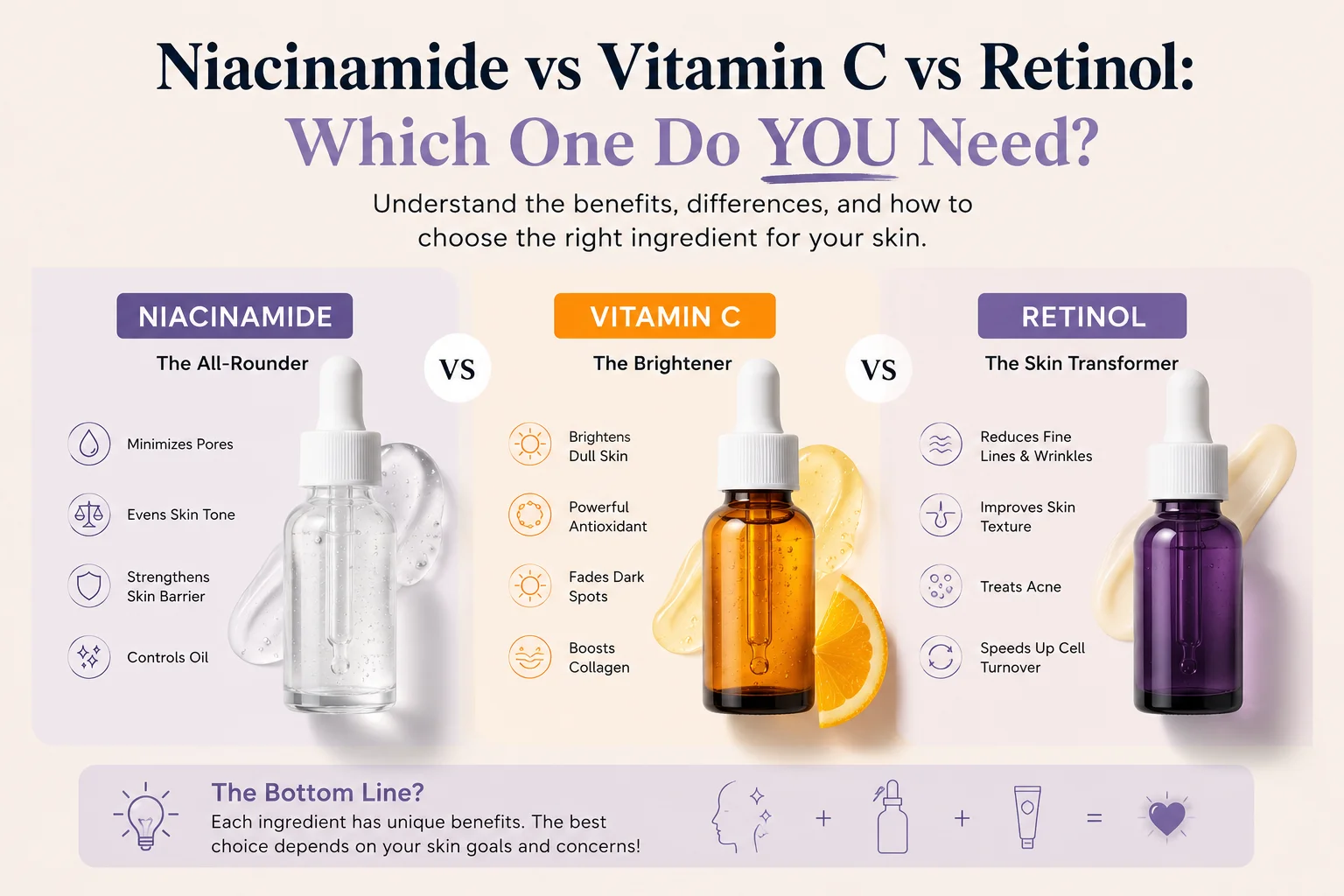
Niacinamide vs Vitamin C vs Retinol: Which One Do YOU Need?
Introduction: The Skincare Active Confusion
If you’ve scrolled through skincare TikTok or Instagram lately, you’ve probably heard these three ingredients mentioned repeatedly: niacinamide, vitamin C, and retinol. These powerhouse actives dominate conversations in Pakistani beauty communities, from Karachi’s skincare enthusiasts to Lahore’s dermatology clinics. But which one actually deserves a spot in your routine?
Understanding the difference between niacinamide vs vitamin C vs retinol can transform your skin health journey from guesswork to results. While Western markets have embraced these ingredients for years, Pakistani consumers are now increasingly seeking science-backed skincare solutions that work in our humid climate. This comprehensive guide will help you choose the right active ingredient based on your specific skin concerns, age, and lifestyle.
What is Niacinamide? The Multi-Tasking Hero
Niacinamide, also known as vitamin B3, is a water-soluble vitamin that addresses multiple skin concerns simultaneously without causing irritation. It’s become the go-to ingredient for Pakistani skin dealing with pollution, sun damage, and post-acne marks. From reducing enlarged pores to controlling excess oil production, niacinamide benefits extend across virtually every skin type and concern.
This gentle active works by strengthening your skin’s natural barrier, reducing inflammation, and regulating sebum production—making it ideal for Karachi’s humidity and Lahore’s pollution. Unlike harsher actives, niacinamide for sensitive skin is remarkably well-tolerated, with minimal risk of irritation or photosensitivity. Pakistani dermatologists frequently recommend niacinamide as a safe starting point for skincare beginners exploring active ingredients.
Key Benefits of Niacinamide
Pore Minimization and Oil Control
Niacinamide regulates sebaceous gland activity, making it perfect for oily and combination skin types prevalent in Pakistan’s climate. Clinical studies show that 5-10% niacinamide concentration can visibly reduce pore appearance within 8-12 weeks of consistent use. For those struggling with shiny T-zones and enlarged pores in humid weather, niacinamide provides long-term oil control without over-drying skin.
Hyperpigmentation and Dark Spot Reduction
For post-inflammatory hyperpigmentation (PIH) caused by acne—a major concern among Pakistani youth—niacinamide inhibits melanosome transfer to skin cells. It’s particularly effective for treating acne scars and uneven skin tone without the harsh side effects of skin-lightening creams containing hydroquinone. Results become visible within 4-8 weeks of consistent twice-daily application.
Anti-Aging and Skin Barrier Support
Niacinamide boosts ceramide production, strengthening the skin barrier against environmental stressors like pollution and UV damage common in Pakistani cities. It also stimulates collagen production, reducing fine lines and improving skin elasticity for mature skin. This dual action makes niacinamide valuable for both prevention and correction of aging signs.
What is Vitamin C? The Brightening Powerhouse
Vitamin C, or L-ascorbic acid in its most potent form, is a powerful antioxidant that brightens skin, fades dark spots, and protects against free radical damage. Pakistani women particularly seek vitamin C for hyperpigmentation caused by melasma, sun exposure, and hormonal changes. When formulated correctly, vitamin C serum benefits include dramatic improvements in skin luminosity and texture within weeks.
However, not all vitamin C products are created equal—stability and formulation matter immensely in Pakistan’s hot, humid climate where oxidation happens rapidly. Look for vitamin C derivatives like ascorbyl glucoside or ethyl ascorbic acid if you have sensitive skin, as they provide similar benefits with less irritation. Fresh formulations in opaque, airtight packaging are essential to prevent oxidation that turns your serum orange and ineffective.
Key Benefits of Vitamin C
Brightening and Radiance
Vitamin C inhibits tyrosinase, the enzyme responsible for melanin production, making it highly effective for treating dullness and achieving that coveted glass skin glow. Pakistani users typically notice brighter, more even-toned skin within 4-6 weeks of daily application. The radiance-boosting effects are cumulative, meaning continued use delivers increasingly luminous results over time.
Antioxidant Protection
In cities like Karachi and Lahore with high pollution levels, vitamin C for antioxidant protection shields skin from environmental damage, smog, and UV-induced free radicals. It works synergistically with sunscreen to enhance photoprotection—critical in Pakistan’s intense sun exposure. Morning application provides all-day defense against oxidative stress that accelerates aging and pigmentation.
Collagen Boosting
Vitamin C is essential for collagen synthesis, improving skin firmness and reducing signs of aging like sagging and wrinkles. For Pakistani women in their 30s and beyond, incorporating vitamin C can help maintain youthful skin structure and prevent premature aging. This benefit works alongside its brightening effects for comprehensive skin transformation.
What is Retinol? The Gold Standard Anti-Ager
Retinol, a vitamin A derivative, is considered the gold standard ingredient for anti-aging, acne treatment, and skin texture refinement. Dermatologists worldwide, including those practicing in Pakistan, recommend retinol for proven results in cell turnover acceleration and collagen stimulation. However, retinol requires careful introduction, especially for first-time users dealing with potential retinol purging and sensitivity.
This prescription-strength active (in higher concentrations) works by speeding up cell renewal, unclogging pores, and stimulating deeper collagen production than most other ingredients. Pakistani users must understand that retinol benefits come with an adjustment period—expect some dryness, peeling, and increased sun sensitivity initially. Starting with lower concentrations (0.25-0.5%) and gradually building tolerance is crucial for South Asian skin prone to post-inflammatory hyperpigmentation.
Key Benefits of Retinol
Acne Treatment and Prevention
Retinol for acne works by preventing dead skin cells from clogging pores while reducing inflammation—making it effective for both active breakouts and acne-prone skin. Pakistani dermatologists often prescribe retinoids for persistent acne that hasn’t responded to topical antibiotics or benzoyl peroxide. The deep pore-clearing action addresses acne at its source, preventing future breakouts while treating existing ones.
Anti-Aging and Wrinkle Reduction
No other ingredient matches retinol’s proven ability to reduce fine lines, wrinkles, and photoaging according to decades of clinical research. For Pakistani women concerned about premature aging from sun exposure, retinol stimulates collagen production and improves skin thickness over time. Visible improvements in skin firmness and wrinkle depth typically appear after 12 weeks of consistent use.
Skin Texture and Tone Improvement
Retinol accelerates cell turnover, revealing fresher, smoother skin while fading dark spots, acne scars, and rough patches. Users typically notice improved skin texture within 12 weeks of consistent use, though visible anti-aging results may take 6-12 months. The exfoliating action also enhances product absorption, making other skincare ingredients work more effectively.
Niacinamide vs Vitamin C: Which Brightening Agent Wins?
The niacinamide vs vitamin C debate has confused skincare enthusiasts for years, with myths about combining these ingredients causing unnecessary hesitation. Truth: You can safely use both niacinamide and vitamin C together in modern formulations, despite outdated information suggesting they shouldn’t mix. Pakistani dermatologists now recommend layering these ingredients for comprehensive brightening and antioxidant protection.
Choose niacinamide if: You have sensitive skin, struggle with excess oil and large pores, or want a gentle brightening effect without irritation risk. Niacinamide works beautifully in Pakistan’s humid climate and rarely causes adverse reactions, making it ideal for skincare beginners in Karachi, Lahore, and Islamabad.
Choose vitamin C if: You’re targeting stubborn dark spots, sun damage, or dull skin requiring intensive brightening. Vitamin C provides more dramatic radiance-boosting results but requires commitment to fresh formulations and proper storage to prevent oxidation in hot Pakistani weather.
Niacinamide vs Retinol: Gentle vs Powerful
When comparing niacinamide vs retinol, you’re essentially choosing between a gentle multi-tasker and a powerful transformer. These ingredients serve different purposes and actually complement each other beautifully when layered correctly. Many Pakistani dermatologists recommend using both—niacinamide in the morning for barrier support and oil control, retinol at night for anti-aging and acne treatment.
Choose niacinamide if: You’re new to actives, have sensitive or barrier-compromised skin, or want daily oil control and pore refinement without irritation. Niacinamide can be used twice daily and requires no adjustment period, making it perfect for consistent results without downtime.
Choose retinol if: You’re dealing with stubborn acne, visible signs of aging, or textural irregularities that need intensive treatment. Retinol delivers more dramatic transformation but requires patience through the adjustment period and strict sun protection—non-negotiable in Pakistan’s sunny climate.
Vitamin C vs Retinol: Morning vs Night Actives
The vitamin C vs retinol comparison often comes down to timing: vitamin C protects during the day while retinol repairs at night. These powerhouse ingredients target different concerns and shouldn’t be viewed as competitors but rather complementary components of a complete skincare routine. Pakistani dermatologists frequently prescribe both for comprehensive anti-aging and brightening protocols.
Choose vitamin C if: Your primary concerns are brightening, antioxidant protection, and preventing environmental damage from pollution and UV exposure in Pakistani cities. Apply vitamin C in the morning under sunscreen for enhanced photoprotection and radiance throughout the day.
Choose retinol if: Anti-aging, acne treatment, and texture refinement are your main goals, and you’re willing to commit to gradual results and increased sun sensitivity. Use retinol at night to maximize cell turnover while you sleep, always following with broad-spectrum SPF 50+ during the day.
Can You Use All Three? The Layering Guide
Yes, you can use niacinamide, vitamin C, and retinol together—but proper layering and timing are essential to avoid irritation and maximize benefits. Many Pakistani dermatology patients successfully incorporate all three actives by separating them strategically throughout the day and week. The key is introducing one ingredient at a time, establishing tolerance, then gradually adding others to your routine.
The Perfect Layering Routine
Morning Routine
After cleansing, apply vitamin C serum to clean skin, wait 1-2 minutes for absorption, then layer niacinamide serum or moisturizer containing niacinamide. Follow with broad-spectrum sunscreen SPF 50+ (absolutely essential when using any active ingredients in Pakistan’s sun). This combination provides antioxidant protection, oil control, and brightening throughout the day.
Evening Routine
Cleanse thoroughly to remove sunscreen and pollution, apply niacinamide serum first to support skin barrier before retinol application. Wait 20-30 minutes, then apply retinol (start 2-3x weekly, building to nightly as tolerated), and finish with a nourishing moisturizer. Some dermatologists recommend “buffering” retinol by applying moisturizer first for sensitive skin adjusting to the active.
Alternate Method for Sensitive Skin
If using all three causes irritation, separate retinol to alternate nights while using vitamin C and niacinamide on “retinol-free” days. Pakistani users with reactive skin often find success with retinol 3x weekly paired with daily niacinamide and vitamin C application on non-retinol mornings. This approach delivers transformation while respecting skin’s tolerance limits.
How to Choose Based on Your Skin Concerns
For Acne-Prone Skin
Best choice: Niacinamide + Retinol combination. Start with niacinamide serum for acne to reduce inflammation, control oil, and support healing while gradually introducing retinol for deep pore-clearing and prevention. Pakistani dermatologists recommend this duo for hormonal acne, closed comedones, and persistent breakouts common among young adults in urban areas.
Avoid: High-strength vitamin C (above 15%) which may irritate active breakouts, though lower concentrations can help fade post-acne marks once inflammation subsides.
For Hyperpigmentation and Dark Spots
Best choice: Vitamin C + Niacinamide combination, with retinol added for stubborn melasma or deep pigmentation. This triple-threat approach targets melanin production from multiple pathways while accelerating cell turnover to reveal brighter skin. Pakistani women dealing with post-inflammatory hyperpigmentation from acne see excellent results with this layered approach over 8-12 weeks.
Pro tip: Always pair pigmentation-fighting actives with religious SPF 50+ application, as sun exposure will undo all progress and worsen dark spots, especially in Pakistan’s intense UV environment.
For Anti-Aging and Fine Lines
Best choice: Retinol, supplemented with Vitamin C and Niacinamide. Retinol for anti-aging remains the gold standard with decades of research supporting its collagen-boosting abilities. Add vitamin C for additional antioxidant protection and collagen support, plus niacinamide to strengthen skin barrier and minimize irritation from retinol use.
Pakistani women in their 30s+ should start retinol early to prevent and address signs of aging accelerated by sun exposure and pollution in urban environments.
For Sensitive or Rosacea-Prone Skin
Best choice: Niacinamide only, at least initially. Niacinamide for rosacea and sensitive skin types offers anti-inflammatory benefits without the irritation risk of vitamin C or retinol. Focus on barrier repair and calming before considering gentle vitamin C derivatives or low-strength retinol under dermatologist supervision.
Look for: Pakistani brands offering fragrance-free, minimal formulations designed for reactive skin common in South Asian genetics and climate-stressed complexions.
For Oily and Large Pores
Best choice: Niacinamide (daily) + Retinol (2-3x weekly). Niacinamide for oily skin regulates sebum production and visibly minimizes pores, while retinol prevents congestion and refines skin texture over time. This combination addresses the root causes of enlarged pores prevalent in Pakistan’s humid climate rather than just temporarily mattifying shine.
Results timeline: Expect to see oil control improvements within 2-4 weeks with niacinamide, while pore refinement from retinol takes 8-12 weeks of consistent use for maximum visible improvement.
Pakistani Brand Recommendations by Ingredient
Best Niacinamide Products in Pakistan
The Ordinary Niacinamide 10% + Zinc 1%
Available through Midhat.pk and other authorized retailers, this affordable serum delivers high-strength niacinamide for oil control and pore minimization. Pakistani users love its lightweight texture perfect for humid weather and visible results within weeks. Price point makes it accessible for students and young professionals entering the active ingredients world.
CeraVe PM Facial Moisturizing Lotion
Contains niacinamide alongside ceramides for barrier repair—ideal for Pakistani skin dealing with pollution damage and over-cleansing. Available at major pharmacies and through Midhat.pk moisturizers collection, it works beautifully as a niacinamide-infused moisturizer for combination to oily skin types. The non-comedogenic formula won’t clog pores in humid conditions.
Local Option – Derma Essentia Niacinamide Serum
Pakistani-formulated specifically for South Asian skin concerns including hyperpigmentation and excess sebum production in tropical climates. Climate-tested formulation withstands Karachi’s humidity without pilling under sunscreen, making it practical for daily use in local weather conditions. Affordable pricing supports consistent long-term use for best results.
Best Vitamin C Products in Pakistan
Timeless Vitamin C + E Ferulic Acid Serum
Available through Midhat.pk, this L-ascorbic acid formula delivers potent brightening with enhanced stability from ferulic acid. Pakistani dermatologists recommend it for serious hyperpigmentation and anti-aging goals, though it requires refrigeration to prevent oxidation in hot weather. The 20% L-ascorbic acid concentration provides maximum efficacy for stubborn dark spots.
The Ordinary Ascorbyl Glucoside Solution 12%
A gentler vitamin C derivative perfect for sensitive Pakistani skin beginning their brightening journey without irritation risk. Available through authorized retailers including Midhat.pk serum collection, it provides gradual brightening without the irritation risk of pure L-ascorbic acid formulations. Water-based texture absorbs quickly in humid climates.
Minimalist Vitamin C 10% Face Serum
Increasingly popular among Pakistani consumers for its stable ethyl ascorbic acid formulation that withstands local climate challenges better than pure L-ascorbic acid. The lightweight, non-sticky texture works well under makeup and sunscreen—essential for daily wear in Pakistan’s urban environments. Affordable price point encourages consistent use for cumulative brightening benefits.
Best Retinol Products in Pakistan
The Ordinary Retinol 0.5% in Squalane
Ideal starting strength for Pakistani users new to retinol, with squalane providing buffering moisture to minimize irritation and flaking. Available through <a href=”https://midhat.pk”>Midhat.pk</a> and authorized stockists, it allows gradual tolerance building before advancing to stronger concentrations if needed. The oil-based formula prevents excessive dryness common during retinol adjustment.
CeraVe Resurfacing Retinol Serum
Combines encapsulated retinol with ceramides and niacinamide for barrier protection—perfect for Pakistani skin prone to post-inflammatory hyperpigmentation from retinol irritation. The encapsulation technology releases retinol slowly, reducing purging intensity while maintaining efficacy over time. Fragrance-free formula suits sensitive skin building retinol tolerance.
Prescription Options
Pakistani dermatologists commonly prescribe Retin-A (tretinoin) or Differin (adapalene) for acne and anti-aging when over-the-counter retinol isn’t delivering desired results. These require medical supervision but offer more dramatic transformation for stubborn skin concerns resistant to cosmetic-grade actives. Always start under dermatologist guidance to minimize irritation and hyperpigmentation risk.
Common Mistakes Pakistani Users Make
Mistake #1: Skipping Sunscreen
The biggest mistake when using any active ingredient—especially retinol and vitamin C—is inadequate sun protection in Pakistan’s intense UV environment. SPF 50+ broad-spectrum sunscreen is non-negotiable, requiring reapplication every 2-3 hours when outdoors. Actives increase photosensitivity while simultaneously working to reverse sun damage, making sun exposure without protection counterproductive and potentially harmful.
Many Pakistani users underestimate local UV intensity, assuming cloudy days or indoor time eliminates sunscreen need, but UVA rays penetrate windows and clouds. UVA causes aging and pigmentation that undermines all your active ingredient efforts, essentially wasting your investment in expensive serums.
Mistake #2: Using Too Many Actives Too Soon
Enthusiastic beginners often introduce niacinamide, vitamin C, and retinol simultaneously, overwhelming skin and triggering irritation, barrier damage, and breakouts. Start with one active ingredient for 4-6 weeks, establish tolerance and results, then gradually add others. Pakistani dermatologists see countless patients with compromised skin barriers from rushing the active ingredient introduction process.
Your skin didn’t develop concerns overnight—healing and transformation require patience, consistency, and gradual progression rather than aggressive, immediate intervention that damages more than it helps.
Mistake #3: Inconsistent Application
Active ingredients require consistent, long-term use for results—sporadic application won’t deliver the transformation you’re seeking. Pakistani users often abandon products after 2-3 weeks without visible change, not understanding that cell turnover and collagen remodeling take months. Niacinamide shows results fastest (4-6 weeks), while vitamin C and retinol require 8-12 weeks minimum for noticeable improvements.
Set realistic expectations and commit to at least 3 months of consistent use before evaluating whether an active ingredient works for your specific skin concerns and goals.
Mistake #4: Ignoring Product Stability
Vitamin C oxidizes rapidly in Pakistan’s heat and humidity, turning orange-brown and becoming ineffective or potentially irritating to skin. Store vitamin C serums in cool, dark places (refrigeration ideal), and replace them every 3-4 months regardless of remaining product. Oxidized vitamin C won’t brighten skin and may cause staining or irritation instead of benefits.
Similarly, retinol degrades with light and air exposure—always use products in opaque, airtight packaging and store away from bathroom humidity and window sunlight for maximum efficacy.
Mistake #5: Over-Exfoliating with Multiple Actives
Combining retinol with AHA/BHA chemical exfoliants, vitamin C at high strengths, and physical scrubs creates excessive exfoliation, damaging skin barrier and triggering sensitivity. Pakistani users often don’t realize that retinol itself is exfoliating, making additional exfoliation redundant or harmful. Stick to one primary exfoliating active (retinol) and support it with gentle, barrier-strengthening ingredients like niacinamide.
Signs of over-exfoliation include tightness, stinging with product application, increased redness, and worsening breakouts—requiring a complete active break to restore skin health before resuming.
FAQs About Niacinamide, Vitamin C, and Retinol
Can I use niacinamide and vitamin C together?
Yes, modern formulations allow safe combination of niacinamide and vitamin C despite old myths about pH incompatibility causing niacin flushing. Pakistani dermatologists now recommend layering both for comprehensive brightening and antioxidant protection without concerns. Apply vitamin C first for absorption at lower pH, wait 1-2 minutes, then follow with niacinamide products for optimal results without interaction concerns.
What percentage of niacinamide is effective?
Clinical studies show effectiveness at 2-5% niacinamide concentration, with 10% providing maximum benefits for most skin concerns including oil control, pore refinement, and hyperpigmentation. Pakistani skin tolerates niacinamide well even at higher percentages, though starting at 5% allows you to assess individual response before advancing to stronger formulations. Products available through Midhat.pk range from 5-10% for different tolerance levels.
When will I see results from retinol?
Expect initial skin texture improvements within 4-6 weeks of consistent retinol use, with significant anti-aging and acne results appearing at 12+ weeks of nightly application. Pakistani users must understand that retinol works gradually, remodeling skin at cellular level rather than providing superficial quick fixes. Patience and consistent nightly application (starting 2-3x weekly) deliver transformation that temporary irritation during adjustment makes worthwhile for long-term benefits.
Is vitamin C or niacinamide better for hyperpigmentation?
Both work excellently for hyperpigmentation through different mechanisms—vitamin C inhibits melanin production while niacinamide prevents melanin transfer to skin cells. Pakistani dermatologists often recommend using both together for stubborn dark spots, melasma, and post-inflammatory hyperpigmentation common in South Asian skin. Vitamin C provides faster, more dramatic brightening while niacinamide offers gentle, consistent improvement with barrier support and anti-inflammatory benefits.
Can I use retinol every night?
Build up to nightly retinol use gradually, starting with 2-3 nights weekly for several weeks to establish tolerance without overwhelming skin. Pakistani users with sensitive skin or new to retinol should follow this slow introduction to minimize purging, peeling, and irritation. Once skin adapts (typically 6-8 weeks), nightly application maximizes anti-aging and acne-fighting benefits, though some people maintain 3-4x weekly use indefinitely with excellent results.
Do I need to take breaks from these ingredients?
No scheduled breaks are necessary from niacinamide (safe for indefinite daily use) or vitamin C (continuous use maintains antioxidant protection throughout the year). Retinol can be used long-term without breaks once tolerance is established, though some users prefer occasional pauses during extreme weather or skin stress. Pakistani dermatologists recommend consistency over breaks for sustained results from active ingredients rather than starting and stopping repeatedly.
Conclusion: Your Personalized Active Ingredient Strategy
Choosing between niacinamide vs vitamin C vs retinol doesn’t require selecting just one—strategic combination delivers comprehensive skin transformation addressing multiple concerns simultaneously. Pakistani consumers now have access to quality formulations through retailers like Midhat.pk and local dermatologist recommendations, making science-backed skincare achievable regardless of budget constraints. Start with niacinamide for gentle, multi-tasking benefits, add vitamin C for brightening and antioxidant protection, then introduce retinol for powerful anti-aging and acne treatment when ready.
Remember that active ingredients work gradually, requiring patience, consistency, and proper support through sunscreen, gentle cleansing, and barrier-strengthening moisturizers for best results. Your skincare journey is uniquely yours—what works for Instagram influencers or friends may not suit your specific skin type, concerns, and lifestyle. When in doubt, consult a Pakistani dermatologist who understands local climate challenges, genetic skin characteristics, and culturally appropriate skincare approaches for lasting results.
Related Internal Links: