

Blog
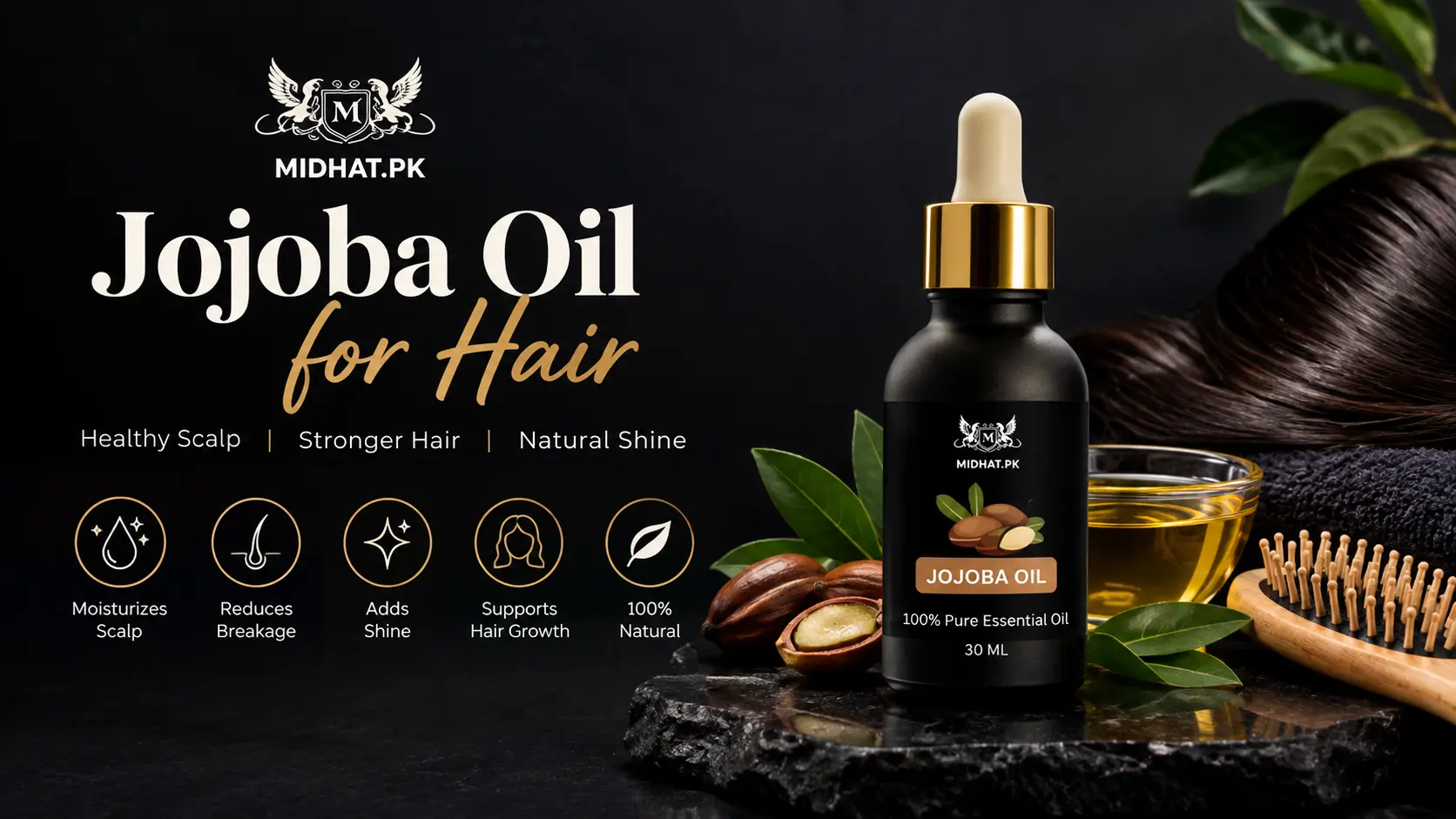
Jojoba Oil for Hair: Benefits, Uses & How to Apply
If your hair feels dry, rough, dull, or difficult to manage, jojoba oil hair care can be a simple addition to your routine. Jojoba oil is commonly used in hair oils, conditioners, masks, and other beauty products because of its conditioning properties and unique composition.
Unlike most plant oils, jojoba oil is technically a liquid wax made primarily of long-chain wax esters. This gives it different characteristics from traditional vegetable oils and is one reason it is widely used in cosmetic formulations. Research reviews have examined jojoba oil’s composition, cosmetic applications, and potential biological activities.
If you are looking for a lightweight oil for dry hair, scalp care, or smoother-looking hair, jojoba oil may be worth considering. However, it is important to understand what it can realistically do and what claims are not supported by strong evidence.
What Is Jojoba Oil?
Jojoba oil is obtained from the seeds of Simmondsia chinensis, a plant native to parts of North America. Although it is commonly called an oil, its chemical structure is primarily made up of wax esters.
Jojoba oil has become a popular ingredient in skincare and hair-care products because it can be used as an emollient and conditioning ingredient.
If you want to learn more about the product itself, you can also explore Jojoba Oil by Midhat.Pk for product details and usage information.
Jojoba oil is also known in Urdu as روغن عناب, making it a familiar search term for people looking for jojoba oil in Pakistan.
Jojoba Oil Hair Benefits
Using jojoba oil for hair can provide several cosmetic benefits, particularly when your main concern is dryness, roughness, or manageability.
1. Helps Condition Dry Hair
One of the main reasons jojoba oil is included in hair-care products is its emollient nature.
Applying a small amount to dry or rough hair can help make the hair feel smoother and softer. It can be particularly useful when applied to the mid-lengths and ends, which are often more prone to dryness.
For people building a simple natural hair-care routine, jojoba oil can therefore work as a conditioning step rather than as a medical treatment.
2. Helps Improve the Look of Dry Hair
Dry hair can appear dull and rough. A small amount of oil can temporarily improve the surface feel and appearance of the hair.
Jojoba oil is widely used in cosmetic formulations, and reviews have examined its role in topical and cosmetic applications.
For best results, avoid applying too much. A few drops are often enough, especially if you have fine or naturally oily hair.
3. Supports Scalp Moisture
Jojoba oil is also used in products designed for scalp and skin care.
If your scalp feels dry, a small amount of jojoba oil may provide a moisturizing and conditioning effect. However, scalp dryness can have several causes, so jojoba oil should not automatically be considered a treatment for persistent scalp conditions.
If you experience ongoing itching, redness, severe flaking, or irritation, it is better to seek professional advice.
4. Can Make Hair Feel Smoother
Hair that is exposed to frequent heat styling, coloring, environmental exposure, and friction can feel rough.
Using a small amount of jojoba oil on the hair lengths may help improve the feel and manageability of dry-looking hair.
The goal should be conditioning rather than saturating the hair with oil.
5. Useful for Dry Hair Ends
Hair ends are usually the oldest part of the hair and can become dry and rough more easily.
To use jojoba oil on your ends:
- Take one or two drops.
- Rub them between your palms.
- Gently smooth the oil over the last few inches of your hair.
This is particularly useful if you want a lightweight finishing step after washing.
6. Can Be Used in Hair Masks
Jojoba oil can also be incorporated into a hair mask or conditioner.
For example, you can combine a small amount of jojoba oil with your regular conditioner and apply it to the lengths of your hair.
If you are experimenting with natural oils, you can also compare jojoba oil with other popular hair-care ingredients before choosing the option that best fits your routine.
Does Jojoba Oil Help Hair Growth?
This is one of the most searched questions about jojoba oil hair care.
Jojoba has a long history of traditional use for scalp and hair concerns, and scientific reviews have discussed its biological properties and cosmetic applications. However, that does not establish jojoba oil as a proven treatment for hair loss or a guaranteed hair-growth solution.
In other words, jojoba oil may be useful for conditioning the hair and supporting a healthy-looking hair-care routine, but you should not expect it to independently regrow lost hair.
If you are experiencing significant or sudden hair loss, identifying the underlying cause is more important than relying on a cosmetic oil.
How to Use Jojoba Oil for Hair
There are several simple ways to include jojoba oil in your routine.
Method 1: Pre-Shampoo Hair Treatment
A pre-shampoo treatment can be useful if your hair feels dry or rough.
Steps:
- Start with dry or slightly damp hair.
- Take a small amount of jojoba oil.
- Apply it to the lengths and ends.
- If your scalp tolerates oil well, apply a small amount to the scalp.
- Leave it on for around 20–30 minutes.
- Wash your hair with a gentle shampoo.
- Use conditioner afterward if required.
You don’t need to use a large quantity. Too much oil can make the hair greasy and more difficult to wash.
Method 2: Jojoba Oil for Hair Ends
If your main concern is dry ends, you don’t need to apply oil to your entire scalp.
Simply place one or two drops of jojoba oil in your palms, spread it between your hands, and lightly apply it to the ends.
This method is especially convenient for people who have an oily scalp but dry-looking ends.
Method 3: Add Jojoba Oil to a Hair Mask
Another option is to add a few drops of jojoba oil to your existing hair mask or conditioner.
Apply the mixture to your hair lengths, leave it according to the product instructions, and rinse thoroughly.
Avoid adding excessive oil because more product does not necessarily mean better results.
Jojoba Oil for Different Hair Types
Jojoba Oil for Dry Hair
If your hair feels dry or rough, apply a small amount to the lengths and ends.
You can use it as a pre-shampoo treatment or as a very light finishing oil.
Jojoba Oil for Oily Hair
People with oily hair do not necessarily need to avoid jojoba oil completely.
Instead, use a smaller amount and focus on the hair lengths and ends rather than applying a heavy layer to the scalp.
Jojoba Oil for Curly Hair
Curly and wavy hair can sometimes feel dry because natural scalp oils may not spread evenly along the hair shaft.
A small amount of jojoba oil may help improve softness and manageability without requiring a heavy oil treatment.
Jojoba Oil for Damaged Hair
If your hair is frequently exposed to coloring, straightening, blow-drying, or other heat treatments, jojoba oil can be included in a conditioning routine.
However, it cannot reverse structural damage that has already occurred. Regular conditioning, gentle handling, and reducing excessive heat remain important.
How Often Should You Use Jojoba Oil?
There is no universal schedule for everyone.
A good starting point is once a week. After seeing how your hair responds, you can adjust the frequency.
If your hair feels soft and manageable, continue with the same amount. If it becomes greasy or heavy, reduce the amount or use it less frequently.
Fine hair generally requires less oil than thick, coarse, or very dry hair.
Jojoba Oil vs Other Hair Oils
Jojoba oil differs chemically from many conventional plant oils because it is primarily composed of wax esters rather than the triglycerides that make up most common vegetable oils.
That does not automatically mean jojoba oil is better than every other hair oil.
Different oils have different characteristics, textures, and cosmetic uses. Your choice should depend on your hair type, scalp condition, personal preference, and the formulation of the product you are using.
If you are exploring a broader hair-care routine, Midhat’s existing hair oil collection can also be used as a related internal resource.
Is Jojoba Oil Safe for Hair?
Jojoba oil is widely used in cosmetic products, but individual sensitivity is still possible.
Before Using Jojoba Oil
- Start with a small amount.
- Consider a patch test if you have sensitive skin.
- Stop using it if you experience irritation.
- Avoid getting oil into your eyes.
- Do not heavily coat the scalp.
- Follow the storage and usage instructions on the product.
If you have persistent scalp irritation, severe dandruff, sores, or unexplained hair loss, speak with a qualified healthcare professional.
Frequently Asked Questions About Jojoba Oil Hair Care
Is Jojoba Oil Good for Hair?
Jojoba oil can be useful as a cosmetic conditioning ingredient. It may help hair feel softer, smoother, and more manageable, particularly when dryness is an issue.
What Are the Benefits of Jojoba Oil for Hair?
The main cosmetic benefits include conditioning dry-feeling hair, improving softness and manageability, and helping dry-looking hair appear smoother.
Does Jojoba Oil Help Hair Growth?
There is not enough strong clinical evidence to claim that applying jojoba oil directly causes new hair growth. It is better considered a cosmetic conditioning ingredient.
How Do You Use Jojoba Oil for Hair?
You can use a small amount as a pre-shampoo treatment, apply a few drops to the ends, or mix a small amount with a hair mask or conditioner.
Can Jojoba Oil Be Used on the Scalp?
Yes, a small amount can be applied to the scalp if your skin tolerates it. However, persistent scalp problems should be assessed professionally rather than treated with jojoba oil alone.
How Often Should I Use Jojoba Oil on My Hair?
Start with once a week and adjust according to your hair type. Fine or oily hair may need less product, while dry or coarse hair may tolerate more.
Can I Leave Jojoba Oil on My Hair Overnight?
You can use jojoba oil as an overnight treatment if your hair and scalp tolerate it, but leaving it overnight is not necessary. A shorter pre-shampoo treatment can also be sufficient for conditioning.
Final Thoughts
Jojoba oil hair care can be a useful addition to a simple routine when your goal is softer, smoother, and more manageable-looking hair.
Its unique wax-based composition and established use in cosmetic formulations make jojoba oil a popular ingredient in hair and skincare products.
For best results, start with a small amount and choose an application method based on your hair type. Jojoba oil can support the cosmetic appearance and feel of your hair, but it should not be presented as a guaranteed treatment for hair loss or hair-growth problems.
For readers in Pakistan who want to explore jojoba oil for both hair and skin, Midhat’s Jojoba Oil is a relevant product page to link from this article.
A consistent routine that includes gentle washing, regular conditioning, reduced excessive heat, and appropriate hair-care products is more useful than relying on a single oil.