

Blog
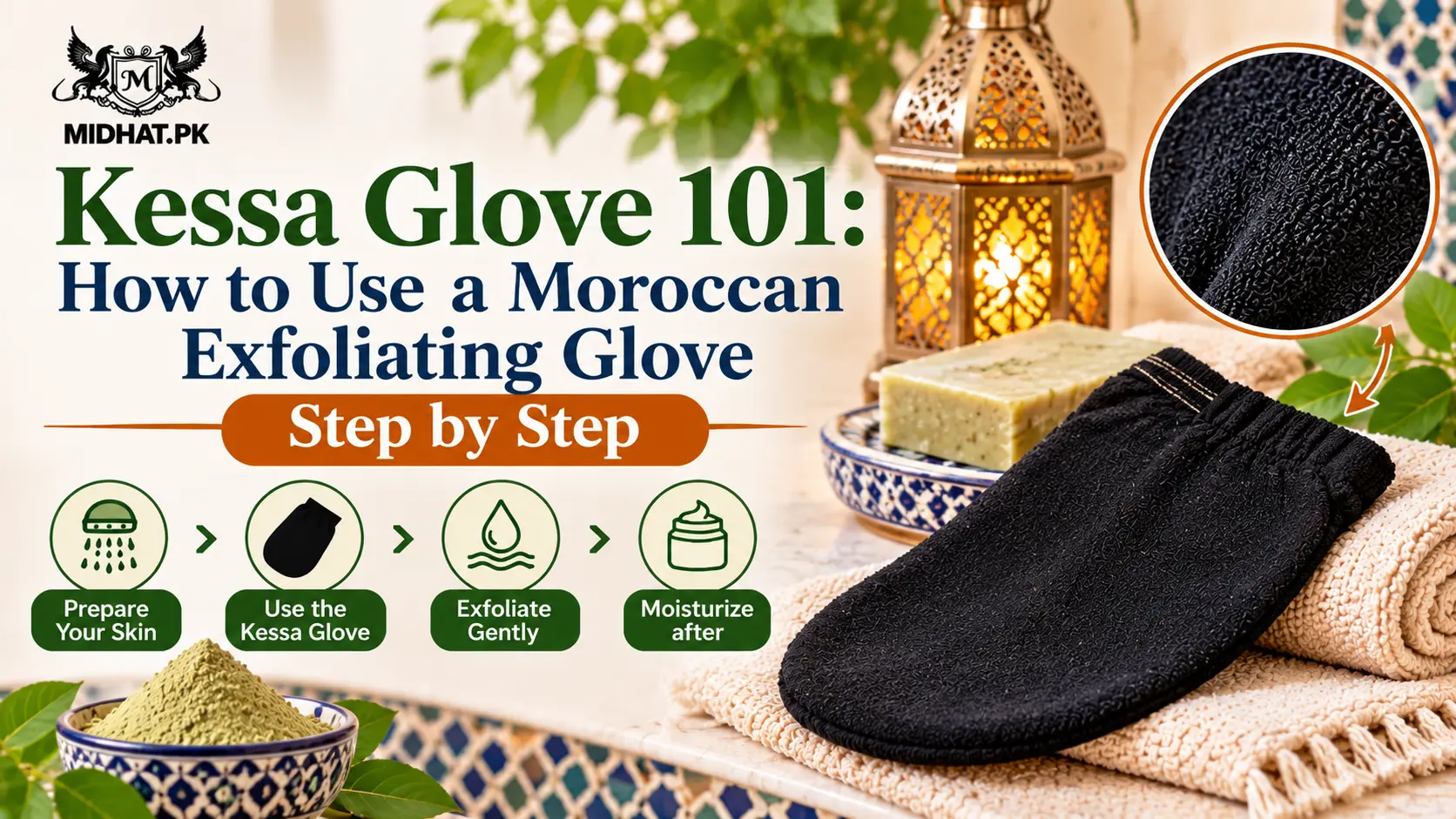
Kessa Glove 101: How to Use a Moroccan Exfoliating Glove Step by Step
Have you ever wondered how Moroccan women maintain their famously smooth, soft, and glowing-looking skin? One of the traditional secrets behind Moroccan body care is the Kessa glove , a special exfoliating mitt used in Moroccan Hammam rituals for generations.
Unlike ordinary bath sponges or washcloths, a Moroccan Kessa glove is designed to provide physical exfoliation by helping remove accumulated dead skin cells and surface impurities. When used correctly with Moroccan Black Beldi Soap, it can become an enjoyable part of your weekly or occasional body-care routine.
But how exactly do you use a Kessa glove? Should you apply soap first? How much pressure should you use? And how often should you exfoliate?
In this complete guide, we will explain everything you need to know about how to use a Moroccan exfoliating glove step by step , including its benefits, preparation, aftercare, and common mistakes to avoid.
What Is a Moroccan Kessa Glove?
A Kessa glove , also known as a Moroccan exfoliating glove, is a traditional textured bathing mitt used in Moroccan Hammam treatments.
It is generally made from a durable, slightly rough fabric designed to exfoliate the outer surface of the skin through gentle friction.
In traditional Moroccan skincare, the Kessa glove is commonly paired with Moroccan Black Beldi Soap. The soap helps prepare and cleanse the skin, while the glove provides the physical exfoliation.
The combination is an important part of the traditional Moroccan Hammam experience.
Unlike a soft bathing sponge, a Kessa glove has a textured surface that helps loosen dead skin cells when used with appropriate pressure on wet skin.
What Are the Benefits of Using a Kessa Glove?
Adding a Moroccan exfoliating glove to your body-care routine may offer several benefits when used appropriately.
1. Helps Remove Dead Skin Cells
One of the primary purposes of a Kessa glove is physical exfoliation.
Its textured surface helps remove loose dead skin cells from the outermost layer of the skin, leaving the body feeling smoother.
2. Improves the Feel of Skin Texture
Regular, gentle exfoliation may help reduce the feeling of roughness and dryness associated with accumulated dead skin cells.
After exfoliation, your skin may feel softer and smoother to the touch.
3. Complements Moroccan Black Soap
A Kessa glove works particularly well as part of a traditional Moroccan Hammam routine.
Moroccan Black Beldi Soap is applied before exfoliation to cleanse and prepare the skin. The Kessa glove is then used after rinsing the soap.
Together, they create a traditional body-care experience.
4. Helps Prepare Skin for Moisturizing
Removing loose dead skin cells can make your skin feel smoother and more receptive to your regular moisturizing routine.
Applying a suitable body lotion or moisturizer after exfoliation helps maintain skin hydration.
5. Makes Your Bathing Routine Feel Like a Spa Experience
Using a Kessa glove transforms an ordinary shower into a more relaxing body-care ritual.
With warm water, Moroccan Black Soap, and gentle exfoliation, you can enjoy a traditional Hammam-inspired experience at home.
How to Use a Moroccan Kessa Glove Step by Step
Now let’s explore the most important part: how to use your Kessa glove correctly.
Follow these six simple steps to enjoy a Moroccan-inspired exfoliation routine at home.
Step 1: Prepare Your Skin With Warm Water
Start by taking a warm shower or spending a few minutes under warm running water.
Allow the warm water to soften the outer surface of your skin.
Avoid excessively hot water because it can contribute to dryness and irritation.
Pro tip: Spend a few minutes allowing your skin to become thoroughly wet before beginning your exfoliation routine.
Step 2: Apply Moroccan Black Beldi Soap
Once your skin is wet, apply a thin, even layer of Moroccan Black Beldi Soap to your body.
Traditionally, Moroccan Black Soap is made using olive-based ingredients and is commonly used in Hammam treatments.
Gently spread the soap over areas such as:
- Arms and hands
- Legs and thighs
- Back
- Shoulders
- Feet
Leave the soap on your body for approximately 5–10 minutes, provided this is consistent with the product’s instructions and your skin tolerates it.
For an authentic Moroccan-inspired routine, explore MIDHAT.PK Moroccan Black Beldi Soap .
Step 3: Rinse Off the Black Soap
After allowing the soap to sit, rinse your body thoroughly with lukewarm water.
Make sure there is no noticeable soap residue left on your skin.
Your skin should remain wet, but it should not be covered with a thick layer of soap.
This prepares your body for the exfoliation step.
Step 4: Wear Your Kessa Exfoliating Glove
Put the Kessa glove over your hand.
Make sure it fits comfortably so you can control your movements.
Start with a small area of your body, such as your lower leg or arm.
Using light to moderate pressure, move the glove in short, gentle strokes.
You may notice small rolls or flakes of dead skin coming away from the surface. This can happen during physical exfoliation, although the amount varies from person to person.
Important: Never scrub aggressively to produce visible skin rolls. Excessive friction can damage your skin barrier and cause irritation.
Step 5: Exfoliate Your Body Gently
Continue exfoliating suitable body areas using gentle, controlled movements.
Pay attention to areas that commonly feel rough, including:
- Elbows
- Knees
- Heels
- Lower legs
- Upper arms
Avoid sensitive areas, including your face, neck, underarms, and intimate areas.
Do not repeatedly scrub the same area.
If your skin starts feeling uncomfortable, painful, hot, or irritated, stop immediately.
Step 6: Rinse and Moisturize Your Skin
Once you finish exfoliating, rinse your entire body with lukewarm water.
Gently pat your skin dry using a clean, soft towel.
The final step is moisturizing.
Apply a suitable body lotion, cream, or moisturizer while your skin is slightly damp.
This helps maintain hydration and leaves your skin feeling comfortable and soft.
You can explore MIDHAT.PK Skin Care Collection to find body-care products for your routine.
Proper moisturizing after exfoliation is an important part of maintaining skin hydration. Read more about safe exfoliation and post-exfoliation skincare .
How to Use a Kessa Glove With Moroccan Black Soap
The traditional Moroccan Hammam ritual combines two important products:
- Moroccan Black Beldi Soap
- Moroccan Kessa Exfoliating Glove
Each product serves a different purpose.
| Product | Main purpose |
|---|---|
| Moroccan Black Soap | Cleanses and prepares the skin |
| Kessa Glove | Provides physical exfoliation |
| Body Moisturizer | Helps maintain skin hydration |
For a convenient at-home Hammam experience, you can explore the Moroccan Black Beldi Soap and Kessa Glove Pack .
This combination brings two traditional Moroccan body-care essentials together.
How Often Should You Use a Kessa Glove?
One of the most common questions about Moroccan exfoliating gloves is how frequently they should be used.
The answer depends on your skin type, sensitivity, and how your skin responds to physical exfoliation.
Here is a cautious starting guide:
- Normal skin: Start with once every 1–2 weeks and adjust according to your skin’s response.
- Dry skin: Use extra caution because physical exfoliation may increase dryness.
- Sensitive skin: A Kessa glove may be too abrasive. Consider a soft washcloth instead.
- Oily skin: Gentle occasional exfoliation may be suitable if your skin tolerates it.
Remember that exfoliation is not something your skin needs every day.
Using a Kessa glove too frequently can cause redness, irritation, and skin-barrier damage.
For professional guidance, read the American Academy of Dermatology’s guide to safely exfoliating at home .
Common Mistakes to Avoid When Using a Kessa Glove
Although using a Moroccan exfoliating glove is relatively simple, certain mistakes can make your experience uncomfortable.
Here are some important things to avoid.
1. Scrubbing Too Hard
Applying excessive pressure does not mean better exfoliation.
Aggressive rubbing can cause irritation, redness, and skin damage.
Always use gentle movements.
2. Using the Glove on Dry Skin
A Kessa glove is traditionally used on wet skin.
Using it on dry skin can increase friction and discomfort.
Always prepare your skin with water first.
3. Using It Every Day
Daily physical exfoliation is unnecessary for most people.
Give your skin enough time to recover between exfoliation sessions.
4. Using It on Your Face
The skin on your face is generally more delicate than the skin on your body.
A traditional Kessa glove is designed for body exfoliation, not facial use.
Choose a gentle facial cleanser and suitable facial exfoliation products instead.
5. Ignoring Skin Irritation
If you have cuts, sunburn, active rashes, eczema flare-ups, or inflamed skin, avoid using an exfoliating glove on those areas.
People prone to dark marks after skin irritation should also be especially careful because aggressive physical exfoliation may contribute to post-inflammatory pigmentation.
6. Forgetting to Moisturize
Exfoliation can leave your skin feeling dry.
Always finish your routine with a suitable moisturizer.
How to Clean and Maintain Your Moroccan Kessa Glove
Proper maintenance helps keep your exfoliating glove clean and ready for its next use.
Follow these simple care tips:
- Rinse your glove thoroughly after every use.
- Remove any remaining soap and loosened skin debris.
- Gently squeeze out excess water without twisting aggressively.
- Hang it in a clean, well-ventilated place to dry completely.
- Avoid leaving it wet inside the shower or in a closed bathroom container.
- Do not share your exfoliating glove with other people.
- Replace it if the fabric becomes damaged, develops an unpleasant smell, or cannot be cleaned properly.
Keeping your Kessa glove clean and completely dry between uses is an important part of good personal hygiene.
Kessa Glove vs Regular Bath Sponge: What’s the Difference?
Many people wonder whether a Kessa glove is different from an ordinary bath sponge.
Although both can be used during bathing, their textures and purposes are different.
| Feature | Kessa Glove | Regular Bath Sponge |
|---|---|---|
| Texture | Textured and relatively rough | Usually soft |
| Main purpose | Physical exfoliation | Everyday cleansing |
| Usage | Occasional | Regular bathing |
| Best paired with | Moroccan Black Soap | Body wash or soap |
| Exfoliation | More noticeable | Generally mild |
If your main goal is gentle everyday cleansing, a regular bath sponge may be sufficient.
If you want to experience traditional Moroccan-style body exfoliation, a Kessa glove offers a different approach.
Why Choose MIDHAT.PK for Your Moroccan Hammam Experience?
Moroccan skincare traditions have become popular among people who enjoy incorporating traditional body-care rituals into their routines.
At MIDHAT.PK, we bring Moroccan-inspired skincare essentials to customers in Pakistan.
Whether you are exploring Moroccan Black Beldi Soap for the first time or looking to experience traditional Hammam-style exfoliation, choosing compatible products can make your routine easier.
You can explore:
- Moroccan Black Beldi Soap – An essential product for a Moroccan-inspired cleansing routine.
- Moroccan Black Soap and Kessa Glove Pack – A convenient combination for an at-home Hammam experience.
- MIDHAT.PK Skincare Collection – Explore additional skincare essentials.
Discover more traditional Moroccan skincare tips through our MIDHAT.PK Blog .
Frequently Asked Questions About Moroccan Kessa Gloves
1. What is a Moroccan Kessa glove used for?
A Moroccan Kessa glove is used for physical body exfoliation. Its textured fabric helps remove loose dead skin cells and improve the feel of skin texture.
2. Should I use a Kessa glove before or after Moroccan Black Soap?
Traditionally, Moroccan Black Beldi Soap is applied first. After allowing it to sit according to the product instructions, rinse it off and then use the Kessa glove on wet skin.
3. Can I use a Kessa glove every day?
No. Daily use is generally unnecessary and may irritate your skin. Start with occasional exfoliation and adjust according to your skin’s tolerance.
4. Can I use a Moroccan exfoliating glove on my face?
A traditional Kessa glove is intended for body exfoliation. Its rough texture may be too harsh for delicate facial skin.
5. Does a Kessa glove remove dead skin?
Yes. Its textured surface provides mechanical exfoliation, helping remove loose dead skin cells from the outer surface of the body.
6. Can I use a Kessa glove without Moroccan Black Soap?
Yes. Moroccan Black Soap is traditionally used with a Kessa glove, but the glove can also be used on wet skin without it. Avoid excessive pressure and follow the glove’s care instructions.
7. Is a Kessa glove suitable for sensitive skin?
Not necessarily. Its textured surface may irritate sensitive skin. People with sensitive, inflamed, or easily irritated skin should consider gentler alternatives and seek dermatological advice if unsure.
8. What should I apply after using a Kessa glove?
After rinsing and gently drying your skin, apply a suitable body moisturizer or lotion. This helps maintain hydration and skin comfort.
9. How do I know when to replace my Kessa glove?
Replace your glove when its fabric becomes worn, damaged, develops persistent unpleasant odors, or can no longer be cleaned properly.
10. Can men use a Moroccan Kessa glove?
Yes. Moroccan Kessa gloves are suitable for both men and women who want to incorporate body exfoliation into their skincare routines, provided their skin tolerates physical exfoliation.
Final Thoughts
A Moroccan Kessa glove is more than an ordinary bathing accessory. It is an important part of a traditional Moroccan Hammam ritual that combines cleansing, physical exfoliation, and moisturizing.
By following the correct steps, using gentle pressure, and avoiding excessive exfoliation, you can enjoy a Moroccan-inspired body-care experience at home.
Whether you are new to Moroccan skincare or already enjoy using traditional beauty products, pairing a Kessa glove with Moroccan Black Beldi Soap can be a simple way to explore this centuries-old body-care tradition.
Ready to experience Moroccan Hammam skincare at home?
Explore the MIDHAT.PK Moroccan Black Soap and Kessa Glove Collection and discover traditional Moroccan-inspired body care.