

Blog
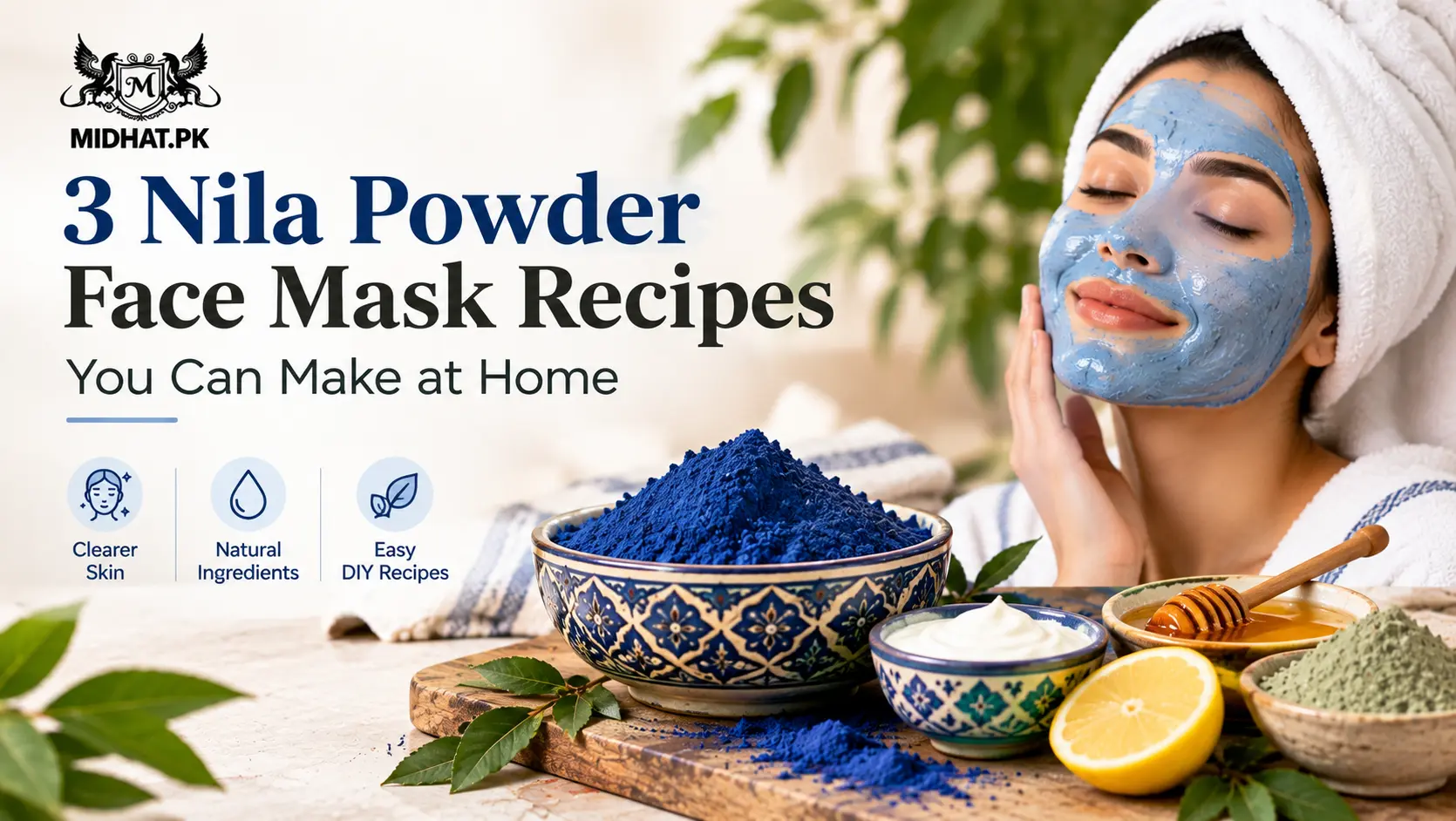
3 Nila Powder Face Mask Recipes You Can Make at Home
Looking for simple ways to incorporate Nila Powder into your skincare routine? A homemade face mask can be an easy way to explore this traditional Moroccan-inspired beauty ingredient without creating a complicated skincare routine.
Nila Powder is commonly used in face and body preparations and is often mixed with ingredients such as plain yogurt, aloe vera gel, or water to create a smooth paste. However, products sold as Nila Powder can differ in their composition, so it is important to check the ingredient list and follow the instructions for your specific product.
In this guide, you will discover three simple Nila Powder face mask recipes, learn how to prepare and apply them, and find out which precautions to take before trying a new skincare ingredient.
In this article, you will learn:
- How to prepare three Nila Powder face mask recipes at home.
- Which ingredients you can use to create a smooth mask.
- How to apply and remove a homemade face mask.
- How to reduce the risk of skin irritation.
- What to know about Nila Powder and skin brightening.
What Is Nila Powder?
Nila Powder is a blue-colored powder associated with traditional Moroccan beauty practices. It is commonly incorporated into face masks and body-care preparations.
Many people interested in Moroccan-inspired skincare use Nila Powder as part of an occasional beauty routine. It is often combined with a suitable base ingredient to make it easier to spread over the skin.
Before purchasing or using Nila Powder, check its source, ingredient information, and intended use. Not every product sold under this name necessarily has the same formulation.
If you want to learn more about this ingredient, read our guide on How to Use Nila Powder: Step-by-Step Guide for Skin .
Benefits and Limitations of Nila Powder Face Masks
Nila Powder is often marketed for skin brightening and improving the appearance of dull skin. However, strong clinical evidence establishing Nila Powder itself as a treatment for pigmentation or permanent skin whitening is limited.
A homemade face mask may temporarily leave your skin feeling clean or soft, depending on its ingredients. These cosmetic effects should not be confused with proven treatment for acne, dark spots, or other skin conditions.
Here are some practical reasons people may enjoy incorporating a simple mask into their skincare routine:
- A simple skincare ritual: Preparing a mask can be an easy addition to an occasional self-care routine.
- Customizable consistency: A suitable liquid or gel base can help you create a paste that is easier to apply.
- A short application routine: You can prepare a small quantity and rinse it off without complicated equipment.
- An opportunity to simplify skincare: Using only a few ingredients makes it easier to identify which ingredient may be causing irritation.
Remember that using more ingredients or applying a mask more frequently does not necessarily improve the results.
3 Nila Powder Face Mask Recipes to Try at Home
These three recipes use different bases to create different textures. Before preparing any recipe, confirm that your Nila Powder is intended for cosmetic use and that you can safely use the other ingredients on your skin.
1. Nila Powder and Plain Yogurt Face Mask
This recipe creates a creamy paste that is easy to spread. Plain yogurt is used as the mixing base rather than as a proven treatment for skin concerns.
Ingredients
- ¼ teaspoon cosmetic-grade Nila Powder.
- 1 teaspoon plain, unsweetened yogurt.
- A few drops of clean water, if needed.
How to prepare it
- Take a clean, small bowl.
- Add the plain yogurt.
- Add the Nila Powder gradually.
- Mix until the powder is evenly distributed and the paste has a smooth consistency.
- Add a few drops of water only if the mixture is too thick.
How to apply it
- Clean your face with a gentle cleanser.
- Pat your skin dry with a clean towel.
- Apply a thin layer, avoiding your eyes, eyelids, lips, and any irritated or broken skin.
- For a first trial, keep the application brief and follow your product’s instructions.
- Rinse gently with lukewarm water without scrubbing.
- Apply a gentle moisturizer if your skin feels dry.
Who might prefer this recipe?
People who prefer creamy masks may find this texture easier to apply. However, yogurt can irritate some people’s skin, and this mixture is not automatically suitable for sensitive or allergy-prone skin.
Prepare only enough for one application and discard the leftover mixture.
2. Nila Powder and Aloe Vera Gel Face Mask
If you prefer a lightweight, gel-like texture, aloe vera gel may be an alternative base. Choose a cosmetic aloe vera product with a clearly listed ingredient profile rather than assuming every aloe product is suitable for facial use.
Ingredients
- ¼ teaspoon cosmetic-grade Nila Powder.
- 1 teaspoon suitable aloe vera gel.
- A few drops of clean water, if needed.
How to prepare it
- Place the aloe vera gel in a clean bowl.
- Add the Nila Powder in a small amount.
- Stir until the mixture is evenly combined.
- Adjust the consistency with a few drops of water if necessary.
- Prepare the mixture immediately before use.
How to apply it
- Wash your face gently.
- Spread a thin layer over the intended area, keeping it away from your eyes and lips.
- Follow the directions for your Nila Powder and aloe vera products.
- Rinse gently if you notice discomfort or irritation.
- Finish with a suitable moisturizer if needed.
What should you keep in mind?
Aloe vera products vary in their ingredients. Added fragrances, preservatives, or other components may irritate some people. Test the ingredients individually before trying the combined mixture.
This recipe is an optional cosmetic preparation, not a proven treatment for acne, redness, or pigmentation.
3. Nila Powder and Water Face Mask
If you want to avoid adding yogurt or aloe vera, a simple water-based mixture is another option, provided the product instructions allow it.
This recipe uses fewer ingredients, making it easier to prepare and adjust.
Ingredients
- ¼ teaspoon cosmetic-grade Nila Powder.
- A small amount of clean water.
How to prepare it
- Add the Nila Powder to a clean bowl.
- Add water a few drops at a time.
- Stir until you obtain a smooth, spreadable paste.
- Avoid adding too much water because the mixture may become difficult to apply.
How to apply it
- Start with clean, dry skin.
- Spread a thin layer over the intended area.
- Keep the mixture away from your eyes, lips, and broken skin.
- Follow the product instructions for application time.
- Rinse thoroughly with lukewarm water.
- Apply moisturizer if your skin feels tight or dry.
Why choose this recipe?
A water-based mixture is straightforward to prepare and does not require a dairy or gel base. However, it may feel less moisturizing than other preparations, and the powder itself may still cause irritation.
Do not assume that fewer ingredients guarantee that a mask is safe for every skin type.
How to Choose the Right Nila Powder Face Mask
The most suitable recipe depends on the product you have, the ingredients you tolerate, and the texture you prefer.
Here is a simple comparison:
| Face mask | Texture | Main consideration |
|---|---|---|
| Nila Powder and yogurt | Creamy | Yogurt may irritate some skin types. |
| Nila Powder and aloe vera gel | Lightweight and gel-like | Check the aloe product’s ingredients. |
| Nila Powder and water | Simple paste | May feel less moisturizing. |
There is no universally best recipe for everyone. If you are new to Nila Powder, start with the simplest suitable preparation and avoid introducing several new ingredients at once.
How to Apply a Nila Powder Face Mask Correctly
Following a gentle application routine can help you avoid unnecessary friction and irritation.
Step 1: Read the Product Instructions
Check whether your specific Nila Powder is intended for facial use. Follow the manufacturer’s directions and do not use unidentified powders on your skin.
Step 2: Clean Your Face
Use a gentle cleanser and pat your skin dry. Avoid applying the mask over sunburn, cuts, or irritated areas.
Step 3: Prepare a Fresh Mixture
Use a clean bowl and clean utensils. Mix only the amount needed for one application.
Step 4: Apply a Thin Layer
Spread the mixture gently without rubbing it into your skin. Keep it away from the eyes and lips.
Step 5: Follow the Product Directions
Do not assume that leaving a mask on longer will produce better results. Remove it immediately if you experience burning, itching, or discomfort.
Step 6: Rinse and Moisturize
Rinse thoroughly with lukewarm water. Avoid harsh scrubbing, then apply a gentle moisturizer if appropriate for your skin.
If you use the mask during the day, continue your normal sun-protection routine.
How Often Should You Use a Nila Powder Face Mask?
There is no well-established, evidence-based frequency specifically for Nila Powder face masks. The appropriate frequency depends on the product formulation and your skin’s response.
If you decide to try a mask, begin cautiously rather than applying it every day. Stop using it if your skin becomes red, itchy, swollen, excessively dry, or uncomfortable.
People with eczema, a damaged skin barrier, or a history of reactions to skincare products should be particularly careful with homemade mixtures.
For more guidance, read our article on Nila Powder for Skin: Benefits, Uses & How to Apply .
Important Safety Tips Before Using Nila Powder
Even ingredients described as natural can cause irritation or allergic reactions. Keep these precautions in mind before trying any DIY skincare recipe.
Perform a Patch Test
Test a new product on a small area of skin before applying it more widely. The American Academy of Dermatology’s guide to testing skincare products explains how dermatologists recommend testing products at home.
A small test cannot guarantee that a product will never cause a reaction, so continue to watch for symptoms.
Avoid Broken or Irritated Skin
Do not apply homemade face masks over cuts, wounds, sunburn, or inflamed skin.
Keep Ingredients Away From Your Eyes
Avoid the eye area and eyelids. If the mixture enters your eyes, rinse thoroughly with clean water.
Do Not Combine Too Many New Ingredients
Trying multiple unfamiliar ingredients at once can make it difficult to identify the cause if a reaction develops. Start with a simple routine and avoid combining DIY masks with strong exfoliating products.
Prepare Fresh Mixtures
Recipes containing yogurt, water, aloe vera, or other perishable ingredients should be prepared fresh. Do not store leftovers for future applications.
Stop if Irritation Develops
If you experience persistent redness, itching, swelling, or burning, stop using the product. Seek medical advice if symptoms are severe or do not improve.
Does Nila Powder Whiten Skin or Remove Dark Spots?
Nila Powder is frequently promoted online for brightening and skin whitening. However, strong clinical evidence showing that Moroccan Nila Powder permanently lightens skin or reliably removes dark spots is lacking.
A face mask may temporarily change how your skin feels or looks after cleansing, but that does not demonstrate a lasting change in pigmentation.
If your goal is to manage dark spots or uneven skin tone, daily broad-spectrum sunscreen and an appropriate skincare routine are more evidence-based starting points. Persistent or changing pigmentation may require advice from a qualified dermatologist.
Avoid products that promise dramatic or permanent skin whitening without reliable evidence.
Where to Buy Nila Powder in Pakistan
If you are looking for Nila Powder in Pakistan, choose a seller that provides clear product information, ingredients, directions for use, and contact details.
You can explore Midhat’s product information here:
Shop Moroccan Nila Powder at Midhat.pk
Before purchasing, check the current product description and make sure the formulation is suitable for your intended use. Follow the instructions supplied with the specific product.
You can also read our related guide, Buy Moroccan Nila Powder in Pakistan , for more information.
Frequently Asked Questions
1. What is the easiest Nila Powder face mask recipe?
A simple water-based paste may be the easiest option if your specific product is intended for facial use and its directions permit mixing with water. Add the water gradually and prepare only enough for one application.
2. Can I mix Nila Powder with yogurt?
Yogurt can be used as a mixing base in some DIY recipes. However, it may irritate certain skin types, so test the ingredients cautiously and avoid the mixture if you have a known sensitivity.
3. Can I mix Nila Powder with aloe vera gel?
A suitable cosmetic aloe vera gel can be used as a base if the instructions for your Nila Powder permit it. Check the ingredient list and test new products before facial application.
4. How long should I leave a Nila Powder face mask on?
Follow the instructions for your particular product. There is no scientifically established application time that is appropriate for every Nila Powder formulation. Remove the mask immediately if you experience irritation.
5. Can I use Nila Powder every day?
Daily use is unnecessary for a DIY face mask and may increase the risk of irritation. If you choose to use one, start cautiously and follow the product instructions.
6. Is Nila Powder suitable for sensitive skin?
Not necessarily. Sensitive skin can react to powders, botanical ingredients, fragrances, and other components. Patch test first, avoid applying the mixture to irritated skin, and stop if a reaction develops.
7. Does Nila Powder permanently whiten skin?
There is insufficient strong clinical evidence to establish that Nila Powder permanently whitens skin. Be cautious of products making guaranteed skin-whitening claims.
8. Can men use Nila Powder face masks?
Men can use facial skincare products intended for their skin, provided the ingredients are suitable for them. The same application instructions and safety precautions apply regardless of gender.
9. Can I store a homemade Nila Powder face mask?
It is best to prepare only enough for one application and discard the remainder, especially when the recipe contains water, yogurt, or aloe vera. Homemade mixtures do not have the same preservation controls as professionally formulated cosmetics.
10. What should I do if a Nila Powder mask irritates my skin?
Remove the mask gently and rinse the area thoroughly. Stop using the mixture. If you develop significant swelling, severe pain, or persistent symptoms, seek appropriate medical care.
Final Thoughts
Nila Powder face masks can be a simple way to explore a Moroccan-inspired skincare routine at home, provided you choose an appropriate product and take sensible precautions.
The three recipes in this guide offer different textures: a creamy yogurt mixture, a lightweight aloe vera mixture, and a simple water-based paste. None is guaranteed to work for every skin type, and none should be treated as a proven remedy for pigmentation or permanent skin whitening.
Start with a simple preparation, test unfamiliar ingredients cautiously, and avoid overusing DIY treatments. Gentle cleansing, moisturizing, and daily sun protection remain important foundations of a healthy skincare routine.
For more information, explore Midhat’s guides on How to Use Nila Powder and Nila Powder for Skin .