

Blog
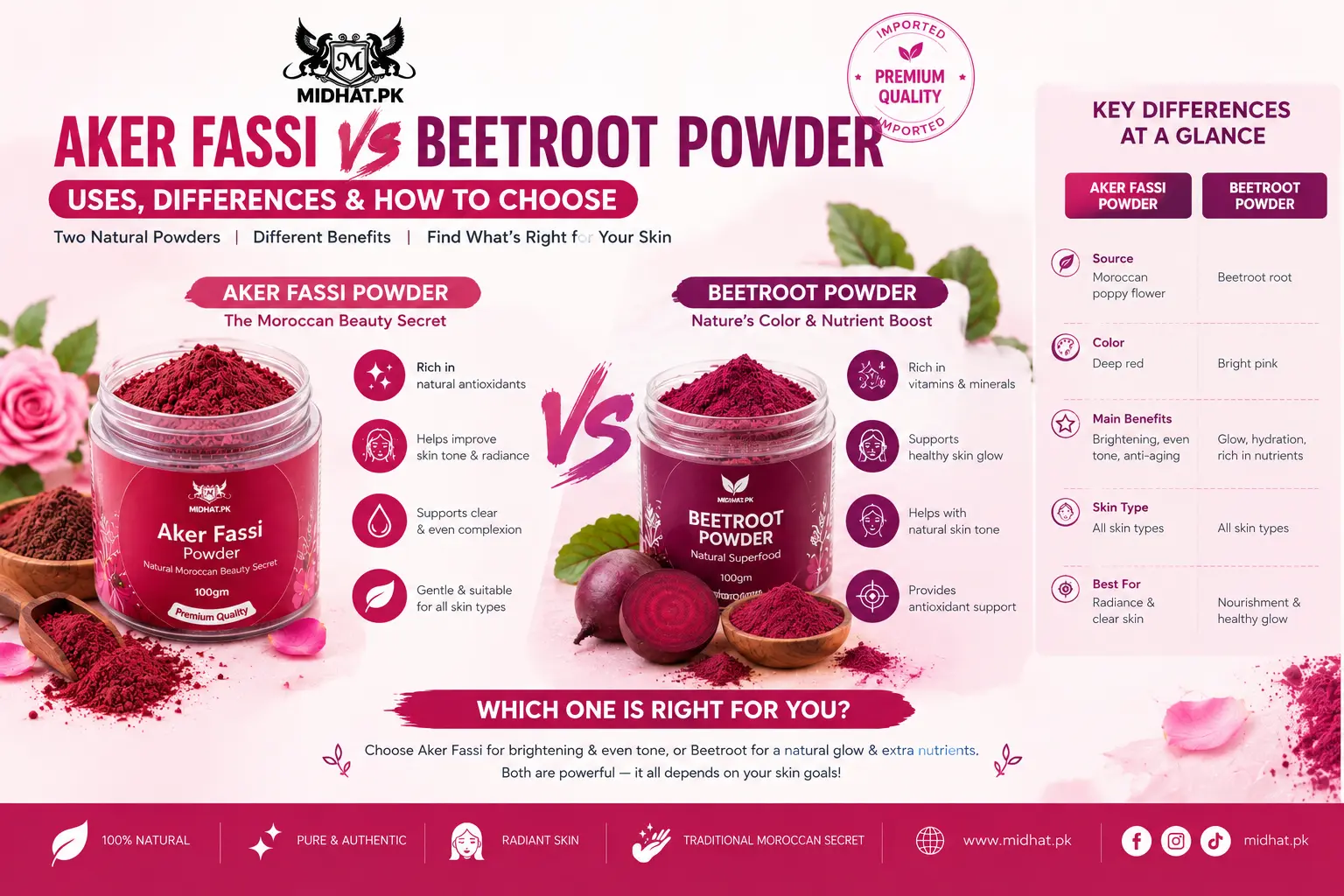
Aker Fassi vs Beetroot Powder: Uses, Differences & How to Choose
If you’re comparing Aker Fassi vs Beetroot Powder, the two ingredients may seem similar because both can provide natural red or pink color in beauty preparations. However, they are different ingredients with different origins, traditional uses, textures, and ways of incorporating them into skincare or cosmetic routines.
Aker Fassi is a traditional Moroccan cosmetic ingredient associated with the city of Fes and is commonly used as a red pigment for lips and cheeks. Beetroot Powder comes from beetroot and is widely used as a natural food and cosmetic colorant.
In this guide, we’ll compare Aker Fassi vs Beetroot Powder, including their origins, appearance, common uses, skincare applications, preparation methods, and important safety considerations.
What Is Aker Fassi?
Aker Fassi, also written as Akkar Fassi or Aker El Fassi, is a traditional Moroccan cosmetic pigment associated with Fes.
Current descriptions of traditional Aker Fassi commonly identify dried red poppy petals and pomegranate peel as key botanical materials, although formulations can vary between products and suppliers.
Traditional preparations are particularly associated with adding reddish or rosy color to the lips and cheeks.
For people looking for Aker Fassi in Pakistan, Midhat offers Pure Aker Fassi Powder with product information available on the website.
What Is Beetroot Powder?
Beetroot Powder is made from beetroot, scientifically known as Beta vulgaris. It is produced by drying and processing beetroot into a powder.
Beetroot contains betalain pigments, which are responsible for its characteristic red-purple color. Research on beetroot and beetroot-derived materials has also identified antioxidant and coloring properties.
In beauty and DIY recipes, beetroot powder is sometimes used as a natural color ingredient in masks, lip products, and other cosmetic preparations.
The important distinction is that beetroot powder is derived from beetroot, whereas traditional Aker Fassi is a distinct Moroccan cosmetic preparation.
Aker Fassi vs Beetroot Powder: Key Differences
Here’s a simple comparison:
| Feature | Aker Fassi | Beetroot Powder |
|---|---|---|
| Origin | Moroccan beauty tradition | Beetroot (Beta vulgaris) |
| Traditional association | Fes, Morocco | Food and natural ingredient uses |
| Typical color | Red, rose, or terracotta | Red to purple |
| Common cosmetic use | Lip and cheek color; beauty preparations | Natural color in DIY preparations |
| Texture | Powder or traditional pigment preparation | Fine vegetable powder |
| Main appeal | Moroccan beauty heritage | Readily available plant-based color |
| Preparation | Varies by traditional/product formulation | Dried and powdered beetroot |
| Product composition | Can vary by supplier | Primarily beetroot-derived |
This comparison shows why the two ingredients shouldn’t simply be treated as interchangeable products.
Aker Fassi vs Beetroot Powder for Skin
When comparing Aker Fassi vs Beetroot Powder for skin, it’s important to separate traditional cosmetic use from claims about treating skin conditions.
Aker Fassi is traditionally used as a cosmetic pigment and can be incorporated into suitable beauty preparations.
Beetroot-derived materials contain pigments and bioactive compounds, but evidence about one homemade beetroot powder mask translating into specific skincare outcomes is limited.
Plant-based skincare research overall is an active area, but evidence for topical botanical products varies substantially by ingredient and formulation. A systematic review of plant-based topical products found some positive outcomes across certain formulations while also noting limitations in the available evidence.
Therefore, neither ingredient should automatically be presented as a proven treatment for acne, pigmentation, or permanent skin whitening.
Aker Fassi for Cosmetic Color
One of the clearest differences in the Aker Fassi vs Beetroot Powder comparison is their traditional cosmetic role.
Aker Fassi has a strong connection with Moroccan lip and cheek color. Traditional preparations are activated with moisture and applied to the lips or cheeks to create a buildable reddish or rosy stain.
This makes Aker Fassi particularly relevant when the goal is to explore traditional Moroccan cosmetic practices.
However, if you’re using a modern Aker Fassi Powder product, always check whether the specific formulation is intended for lips, face, or body use.
Beetroot Powder for Cosmetic Color
Beetroot Powder is naturally red-purple because of beetroot pigments.
Its color makes it useful as a natural coloring ingredient in various recipes, but the final shade depends on the concentration, formulation, and other ingredients.
Unlike traditional Aker Fassi, Beetroot Powder does not specifically represent the Moroccan Fes cosmetic tradition.
Aker Fassi vs Beetroot Powder for DIY Face Masks
Both ingredients can potentially be incorporated into DIY beauty preparations, but the recipe should be kept simple.
Aker Fassi Face Mask
A basic Aker Fassi mask can include:
- ½ teaspoon Aker Fassi Powder
- 1 teaspoon plain yogurt
- ½ teaspoon honey
Mix the ingredients into a smooth paste.
Apply a thin layer to clean skin, avoiding the eye area. Leave it for approximately 5–10 minutes, rinse gently, and moisturize.
For more detailed instructions, see How to Use Aker Fassi Powder: Step-by-Step Guide.
Beetroot Powder Face Mask
If you’re experimenting with Beetroot Powder, a small amount can be mixed with a suitable base such as yogurt or aloe vera gel.
Because beetroot can leave temporary color on the skin, start with a small amount and avoid applying a highly concentrated mixture.
Always patch test first.
Aker Fassi vs Beetroot Powder for Lips
This is an area where product suitability matters particularly strongly.
Traditional Aker Fassi is associated with lip and cheek coloration. However, not every Aker Fassi Powder sold today is automatically intended for lip use.
Beetroot Powder may also be used in some DIY lip-color recipes, but food-grade or plant-based does not automatically mean that a particular powder has been formulated and tested as a cosmetic lip product.
If you want to apply either ingredient to your lips, choose a product specifically intended for cosmetic lip use and follow its instructions.
Which One Should You Use?
The answer depends on what you want to use the ingredient for.
If you’re specifically interested in Moroccan beauty traditions and traditional cosmetic color, Aker Fassi is directly associated with that tradition.
If you’re looking for a beetroot-derived natural color ingredient for a DIY experiment, Beetroot Powder is the more directly relevant ingredient.
The two can therefore serve different purposes rather than being direct substitutes.
Instead of asking which ingredient is universally better, consider:
- What is the intended use?
- Is the product specifically formulated for skin or lips?
- Does it provide a complete ingredient list?
- Does the seller provide clear usage instructions?
- Have you patch tested it?
- Are you expecting a cosmetic color effect or a skincare treatment?
Aker Fassi vs Beetroot Powder for Skin Brightening
Both ingredients may appear in online searches related to natural skin brightening.
However, “brightening” can mean different things. A cosmetic product may make skin appear temporarily fresher or more even, while pigmentation treatment involves addressing the underlying cause of dark spots.
Neither Aker Fassi nor Beetroot Powder should be presented as a guaranteed permanent skin-whitening treatment.
If your main concern is hyperpigmentation, focus on a consistent skincare routine and daily sun protection rather than relying on a DIY powder.
How to Choose Aker Fassi Powder
If you’re specifically interested in Aker Fassi, check the product carefully before buying.
Look for:
- Clear ingredient information
- Intended use
- Application instructions
- Packaging information
- Seller details
- Realistic cosmetic claims
Midhat’s Aker Fassi Powder can be reviewed if you’re looking for Aker Fassi in Pakistan.
Always check the current product information before use because formulations can vary.
How to Choose Beetroot Powder
When buying Beetroot Powder for cosmetic use, consider:
- Ingredient list
- Product purity
- Intended application
- Packaging
- Storage instructions
- Whether it is specifically suitable for cosmetic use
If you intend to use Beetroot Powder on your lips or face, don’t assume that a culinary powder has automatically been tested or formulated for cosmetic application.
A product designed specifically for cosmetic use is easier to assess for that purpose.
Safety Tips for Both Ingredients
Whether you’re using Aker Fassi or Beetroot Powder, follow basic skincare precautions.
Patch Test First
Apply a small amount of the prepared product to a discreet area before using it on your face.
Avoid Broken Skin
Do not apply DIY preparations to cuts, wounds, sunburn, or severely irritated skin.
Keep Away From the Eyes
Avoid the eye area and eyelids.
Don’t Over-Exfoliate
If your recipe also contains an exfoliating ingredient, avoid aggressive rubbing.
Use Fresh DIY Preparations
If you mix either powder with yogurt, water, aloe vera, or another perishable ingredient, prepare only what you need for one application.
Stop If Irritation Occurs
Discontinue use if you experience persistent redness, burning, swelling, itching, or other significant irritation.
Frequently Asked Questions
What is the difference between Aker Fassi and Beetroot Powder?
Aker Fassi is a traditional Moroccan cosmetic pigment associated with Fes, while Beetroot Powder is made from dried beetroot. They have different origins, compositions, and traditional uses.
Is Aker Fassi the same as Beetroot Powder?
No. Aker Fassi and Beetroot Powder are different ingredients. Traditional Aker Fassi is associated with Moroccan cosmetic practices, while Beetroot Powder comes from Beta vulgaris.
Can I use Aker Fassi and Beetroot Powder in the same skincare routine?
There is generally no need to combine them. If you want to experiment with either ingredient, start with one product at a time so you can see how your skin responds.
Which is better for natural color?
The answer depends on the intended use. Aker Fassi has a specific traditional role as a Moroccan cosmetic pigment, while Beetroot Powder provides beetroot-derived red-purple coloring.
Can I use Beetroot Powder on my lips?
Only use a product specifically suitable for cosmetic lip application. Food-grade or culinary suitability does not automatically establish suitability for cosmetic use.
Can Aker Fassi be used on the face?
Aker Fassi can be incorporated into suitable facial cosmetic preparations when the specific product is intended for facial use. Patch testing is recommended before first use.
Can Aker Fassi or Beetroot Powder permanently whiten skin?
Neither should be treated as a guaranteed permanent skin-whitening treatment. Cosmetic color and temporary appearance changes are different from permanently changing natural skin tone.
Final Thoughts
When comparing Aker Fassi vs Beetroot Powder, the biggest differences are their origins, traditional uses, composition, and cosmetic applications.
Aker Fassi is closely associated with Moroccan beauty traditions and traditional lip and cheek coloration, while Beetroot Powder is a beetroot-derived ingredient known for its natural red-purple pigments.
Both can be explored as plant-based beauty ingredients, but the specific product formulation matters. Always check the intended use, ingredient information, and application instructions before putting a powder on your face or lips.
If you’re interested in Moroccan beauty products, you can explore Midhat’s Aker Fassi Powder and read the product information before use.